Start with the job the socks have to do — class use, retail, member kits or an opening launch. Pick one or two styles, keep the colour count small, base the size split on your own members, and calculate every style, colour and size line separately. For standard grip styles each line starts at 50 pairs, so the opening quantity is the number of lines multiplied by what you expect to need — not a figure copied from another studio.
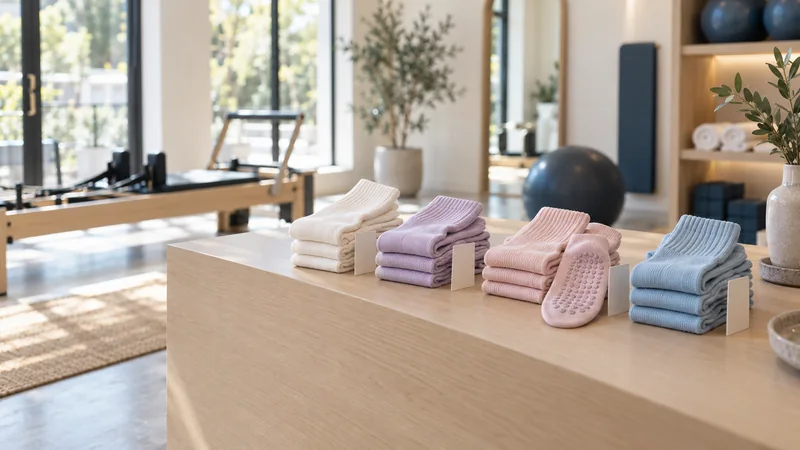
Most studios order grip socks for the first time when they are opening, adding retail or replacing a generic product with their own brand. At that point there are many choices — heights, colours, sizes, logo, packaging — and very little sales history. This guide keeps the first order manageable. It sits between our studio program page, which covers retail and replenishment over time, and the Pilates grip sock category, which shows the constructions you can sample.
The only quantities and timings quoted here are the published starting conditions for standard grip styles: 50 pairs per style, per colour and per size; samples in 10–15 working days; bulk production in 12–16 working days. Other constructions, embroidery, special grip requirements and custom packaging are quoted separately. The quantity tables are arithmetic examples, not recommended order sizes or customer data.
1. Decide what the first order has to do
The same sock can play different roles in a studio, and each role changes the brief:
- Class or member use. Socks are issued to members, included in an intro pack or required for reformer classes. Fit, easy size identification and practical bulk packing matter most.
- Front-desk retail. Pairs are sold individually. Colour presentation, a clear size label and a retail pack your staff can display become part of the product.
- Opening or launch stock. The order has a fixed date. Sample approval and production timing become the main constraints.
- Several locations. Quantities need to be split by site, and you may need carton labels per studio.
Write one sentence describing the main job before choosing styles. If the answer is "both class use and retail", say so: the socks can share one specification while using different pack formats, which our studio program guidance treats as separate decisions.
2. Choose one or two styles, not a catalogue
Each additional style creates its own set of colour and size lines, its own sample and its own reorder record. For a first order, one core style — or one core style plus one contrasting height — is usually easier to size, display and restock. The three live styles below show the main directions currently available on our Pilates category pages:
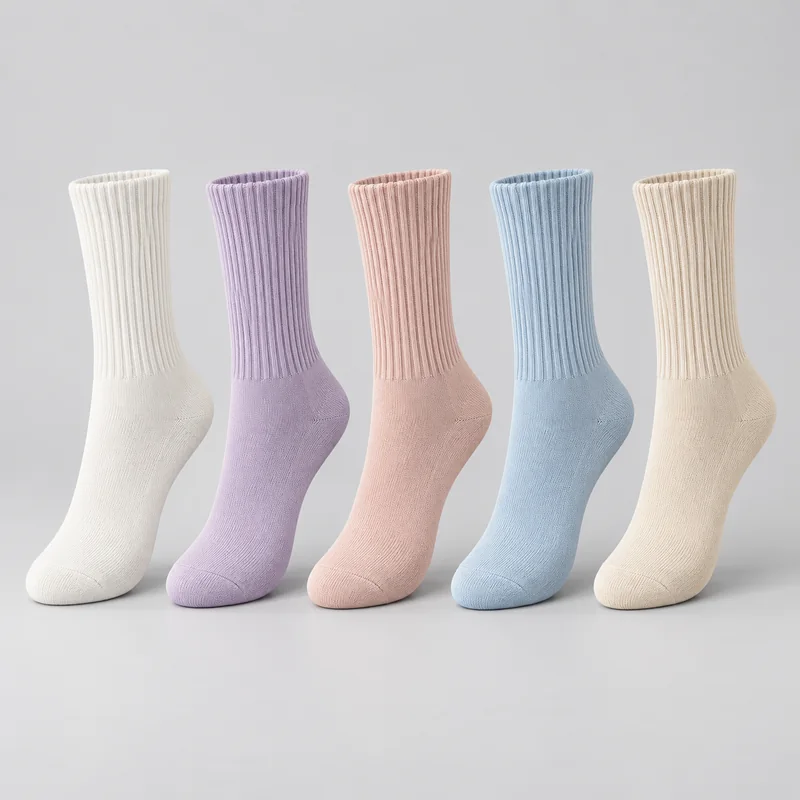
Custom Ribbed Crew Yoga Grip Socks
A closed-toe ribbed crew style with circular sole grip dots. Plan pastel colours, XS to L sizes and branded packaging for studio and wellness retail.
View Product Details →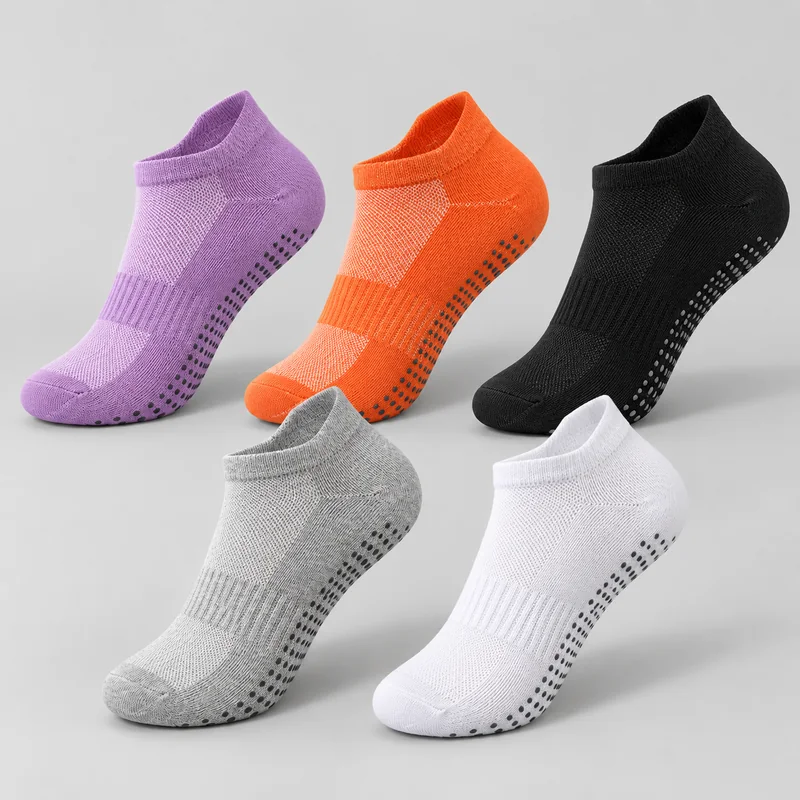
Custom Low-Cut Mesh Yoga Grip Socks
A low-cut style with mesh-knit zones, ribbed midfoot and circular sole grip dots. Develop custom colours, XS to L sizes and branded studio retail packs.
View Product Details →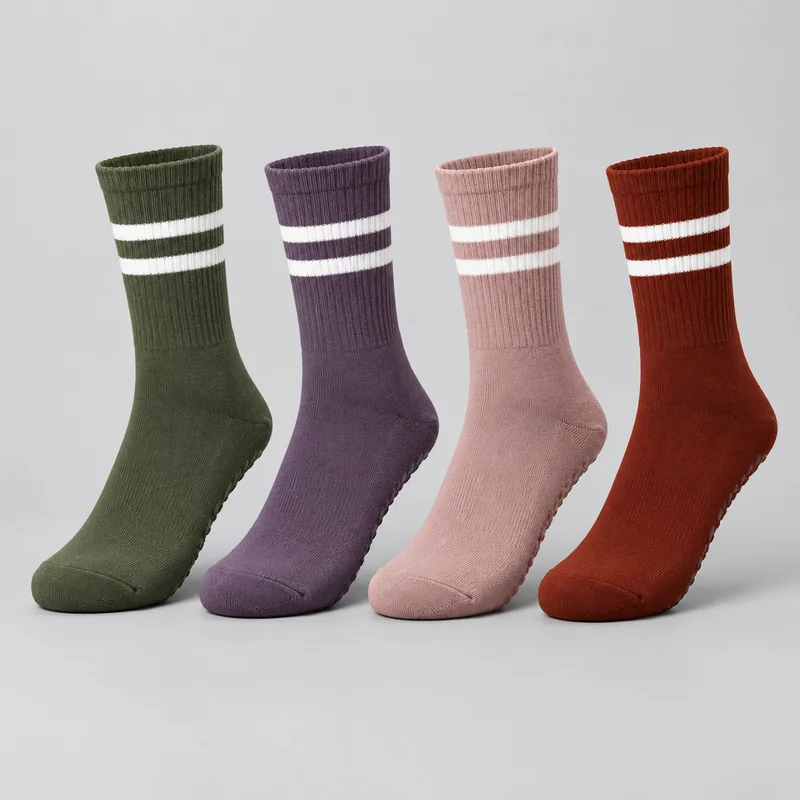
Custom Striped Crew Yoga Grip Socks
A ribbed crew style with two contrasting cuff stripes and circular sole grip dots. Plan custom colours, S to XL sizes and branded studio retail packs.
View Product Details →Two practical differences matter for planning. First, height: the ribbed and striped styles are crew height, while the low-cut mesh style is a shorter alternative. Second, size labels: the ribbed crew and low-cut mesh pages plan sizes from XS to L, while the striped crew page plans S to XL. If you combine styles, check that the size names on each style relate to the same foot-length ranges before you allocate pairs.
3. Build the colour mix: core first, seasonal later
Every colour is a separate SKU line, so colour choices multiply quantity faster than anything else. A simple structure for an opening order:
- Core colour(s). One or two shades you expect to keep year-round and reorder. These carry most of the quantity.
- An accent colour (optional). One shade that ties to the studio brand or opening campaign. Treat it as a test; you can reorder it if it sells.
- Seasonal capsules later. Add them once the core style is approved and selling, so a new colour only changes the knitted shade rather than the whole product.
Approve both the knitted body colour and the sole grip colour on the physical sample. Tone-on-tone and contrast grip look quite different on a shelf, and a screen colour is not a reliable reference.
4. Plan sizes from your own members
There is no universal size split that suits every studio. A studio with mostly adult women, a mixed studio with men's classes and a studio with youth sessions will need different allocations. Use what you actually know:
- Shoe sizes collected at sign-up or in a short member survey, if you have them.
- Instructor observations of which sizes ran out with a previous supplier.
- The wearer groups you plan to sell to in the next season, not the ones you hope to attract later.
Size names such as XS, S, M and L are planning references. Send target foot-length ranges and your market (EU, UK or US sizing), then agree finished measurements and the final size chart on samples. If you are unsure about the smallest or largest size, it is often cleaner to leave it out of the opening order and add it later than to hold slow stock in every colour.
5. Work out your own quantity
For standard grip styles, the minimum applies to each style, colour and size line. Small quantities cannot be pooled across different lines to meet it. That makes the opening quantity easy to calculate once the structure is decided:
| Example structure | SKU lines | Minimum at 50 pairs per line |
|---|---|---|
| 1 style × 1 colour × 3 sizes | 3 | 150 pairs |
| 1 style × 2 colours × 3 sizes | 6 | 300 pairs |
| 1 style × 2 colours × 4 sizes | 8 | 400 pairs |
| 2 styles × 2 colours × 3 sizes | 12 | 600 pairs |
Arithmetic examples only. The minimum is a floor, not a recommendation; it applies to standard grip styles and does not include packaging, delivery or any separately quoted requirement.
The minimum tells you the smallest order a structure allows. Whether you need more in a particular line depends on your own numbers. For each line, estimate:
- Expected use or sales per week for that colour and size, based on class bookings, member numbers or previous retail sales.
- Weeks until a reorder could realistically arrive — sampling is already done for a reorder, but bulk production, packing and transport still take time.
- Any stock you want to hold back for launches, intro packs or a second location.
Multiply the first two, add the third, and compare the result with the 50-pair floor. Lines where your estimate is far below the floor are candidates to remove from the opening order. Our samples and MOQ page includes a downloadable order planner (CSV) for listing each line.
6. Approve one complete sample
A sample is the reference the bulk order and later reorders will be checked against, so review the whole product rather than a photo of the colour:
| Check | Include in your brief | Approve on the sample |
|---|---|---|
| Fit across sizes | Target foot-length ranges and the sizes you plan to buy. | Heel position, cuff feel and length on the smallest and largest planned sizes, not only the middle size. |
| Sole grip layout | Bottom-view reference, grip colour and intended studio use. | The complete sole layout on each size. Agree any activity or wash checks before approval. |
| Colour and logo | Shade references, logo artwork, size and placement. | Knitted colour, grip shade and logo legibility on the real sock. |
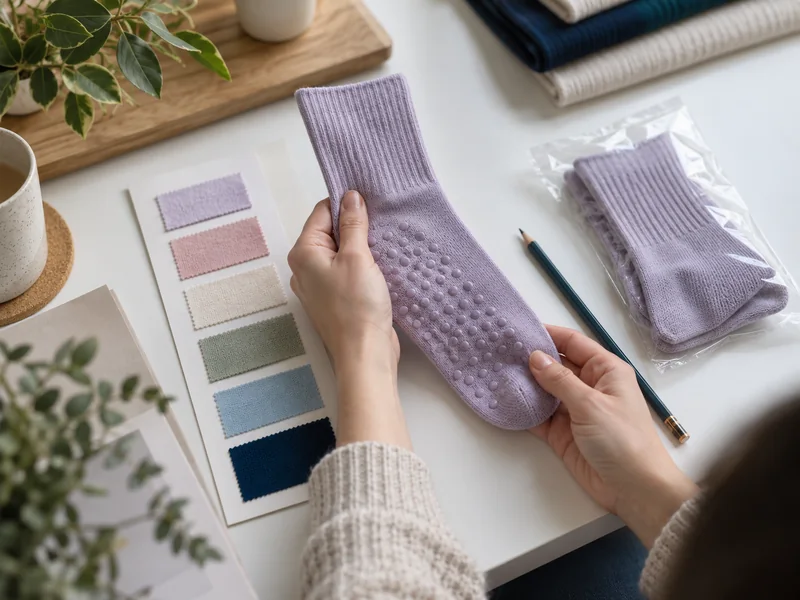
| Pack and labels | Retail or bulk pack format, size label, care text and barcode needs. | One finished pack with visible size information, as your staff will handle it. |
7. Work back from the opening date
For an opening, plan backwards from the day the socks must be in the studio. Published timings for standard grip styles are 10–15 working days for samples and 12–16 working days for bulk production. Both are counted in working days from a confirmed start, and neither includes transport.
- Brief and quotation. Style, colours, sizes, logo, packaging and destination. The quotation confirms sample charges and the schedule start.
- Sampling. 10–15 working days for a standard grip style. Add shipping time for the sample to reach you.
- Your review and any revision. This depends on you. A revised sample needs its own time.
- Bulk production. 12–16 working days from the confirmed production start, after sample, artwork and quantities are approved in writing.
- Transport and receiving. Confirm the delivery method separately; production working days are not an arrival date.
If the opening date is close, simplify the order rather than compressing approval: fewer colours and standard packing reduce the number of things to approve.
8. Decide how socks reach the member
Class-issue socks are often packed in bulk by size so staff can hand them out quickly; retail pairs may need a band, hangtag or bag with the size visible from the front. Both can use the same approved sock. Decide early, because packaging materials and costs are confirmed for the chosen format. Our private label page covers branded packaging options.
9. Plan the first reorder before the first order ships
Record the approved sample reference, colour references, size chart and pack format as soon as bulk is confirmed. Then track remaining stock by size, not only by total pairs — studios usually run out of one or two sizes first. When you reorder, send the approved sample reference, quantities per line, destination and target arrival date, and confirm current production and transport timing. Our quality and reorders page explains how approved versions are kept reusable. To set a reorder point and check margins, see studio sock retail costs and margins.
Frequently asked questions
How many grip socks should a Pilates studio order first?
There is no single right number. Count the style, colour and size lines you need, then estimate weekly use or sales for each line and the time until a reorder could arrive. For standard grip styles each line starts at 50 pairs, so one style in two colours and three sizes starts at 300 pairs.
Can we combine small quantities of different colours to reach the minimum?
No. For standard grip styles the minimum is 50 pairs per style, per colour and per size. Pooling small quantities across different lines does not meet the per-line minimum, so remove or merge lines instead.
How early should we order before the studio opens?
Work backwards from the opening date. Standard grip samples take 10–15 working days and bulk production 12–16 working days, plus sample shipping, your review time and transport. Confirm the schedule start and delivery method in the quotation.
Should class-use socks and retail socks be different products?
They can share one approved sock specification with different pack formats. Explain how staff issue class socks and how retail pairs are displayed so each pack can be quoted and approved.
What should we send to get a quote for a first studio order?
Send the intended style or a reference photo, colours, planned sizes and pairs per line, logo files, pack format, destination and the date you need stock. A short brief is enough to start; details can be refined during sampling.
Next steps
Compare constructions on the Pilates grip sock page, check the order structure on Samples & MOQ, then send your brief through the quote form. Once stock is selling, use our margin and reorder guide.