To choose grip socks for Reformer Pilates with confidence, have one or two instructors wear a low-cut mesh sample and a ribbed crew sample in the same class and score four things: heel hold during footwork, forefoot twist in straps and standing work, sole-dot alignment under the ball and heel, and cuff comfort after class. Approve the style that stays cleanly positioned without pinching—and save that signed-off sample as your production reference.
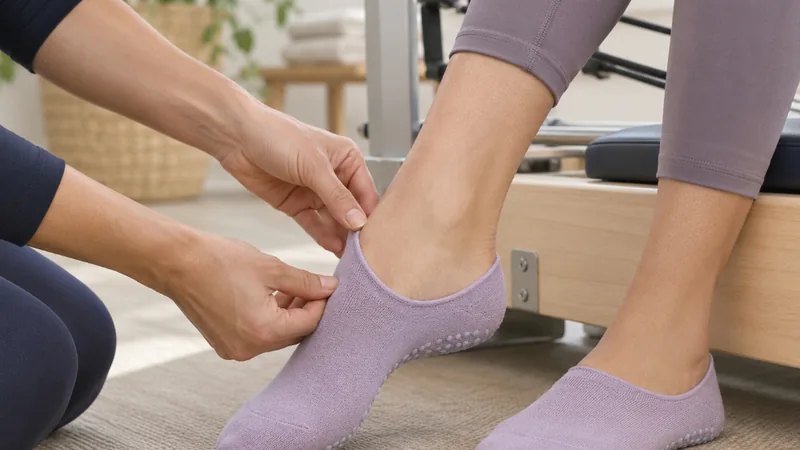
Our custom Pilates grip socks page introduces the main studio silhouettes, and our crew vs low-cut vs cross-strap guide compares how each style looks on the shelf. This guide answers the next operational question before you spend on bulk production: when your instructors wear two physical samples in a real Reformer class, what exact evidence justifies approving one style over the other?
This checklist covers two existing studio references on our site: our low-cut mesh grip sock and our ribbed crew grip sock. Fit, yarn feel, grip material (silicone or PVC as agreed) and sole placement are confirmed on your physical sample—we make no universal slip-resistance claims across studio surfaces. Standard grip order terms (50 pairs per style, colour and size; samples 10–15 working days; bulk 12–16 working days) apply to standard grip styles only; shipping and custom packaging are quoted separately.
1. Why a single Reformer class decides sample approval
Standing on a studio floor for two minutes tells you almost nothing about how Reformer Pilates socks behave under moving spring tension. During a 45- to 50-minute class, feet transition from toes and arches on the footbar to heels on the bar, feet in straps, kneeling work on the carriage and standing lunges with one foot on the wooden platform and one on the moving carriage.
Those transitions expose fit weaknesses immediately. Running both candidate styles in the same class—on the same Reformer upholstery and studio flooring, with the same instructor or two instructors swapping styles in the next session—gives you an apples-to-apples record instead of vague impressions.
2. The two sample styles to test side by side
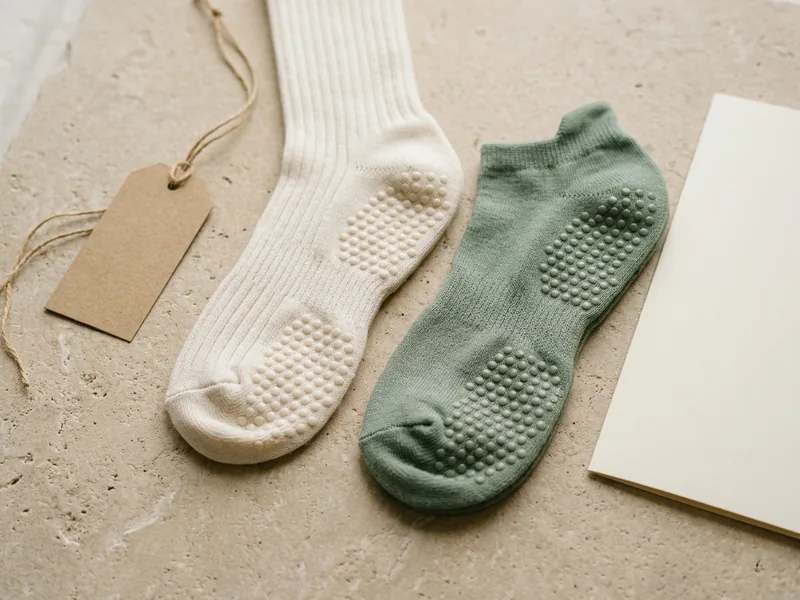
Most studios narrow their opening Reformer test to two proven enclosed-toe references: a low-cut mesh yoga grip sock (lighter ankle profile, breathable mesh instep, ribbed midfoot, circular sole dots) and a ribbed crew yoga grip sock (ribbed leg above the ankle, closed toe, circular sole dots).
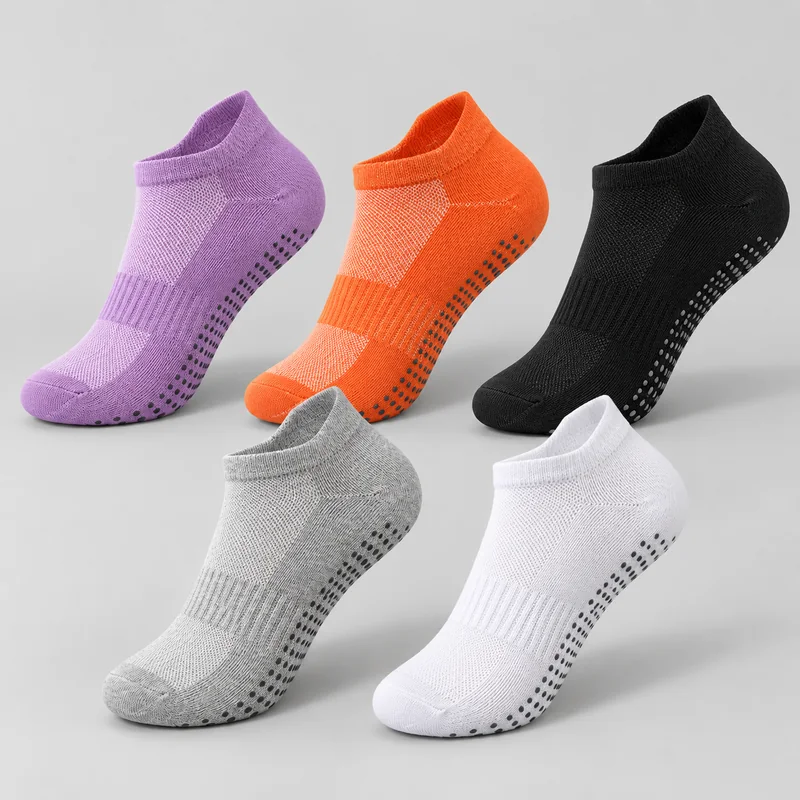
Custom Low-Cut Mesh Yoga Grip Socks
A low-cut style with mesh-knit zones, ribbed midfoot and circular sole grip dots. Develop custom colours, XS to L sizes and branded studio retail packs.
View Product Details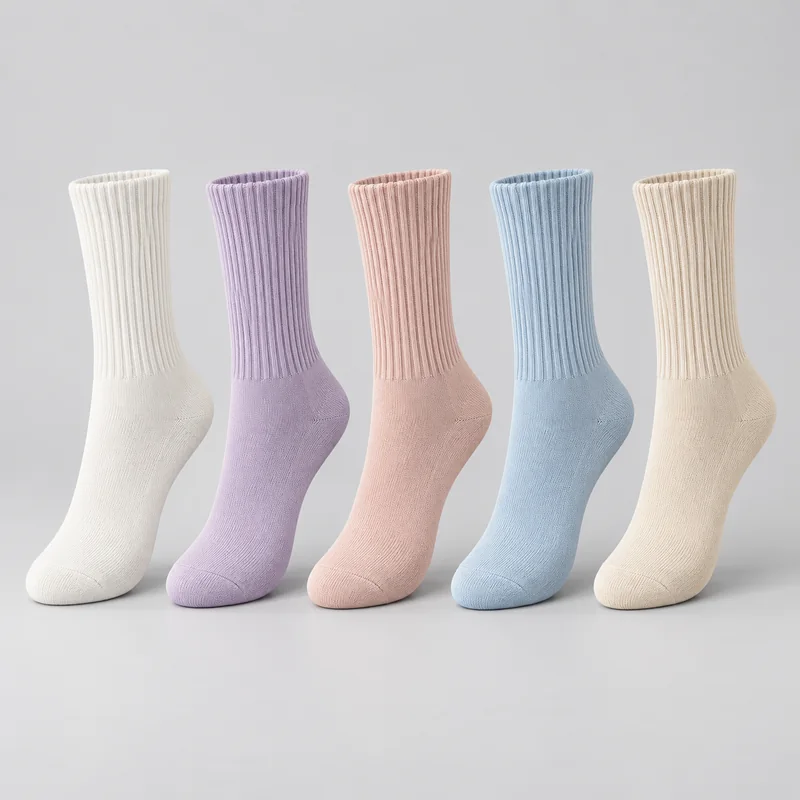
Custom Ribbed Crew Yoga Grip Socks
A closed-toe ribbed crew style with circular sole grip dots. Plan pastel colours, XS to L sizes and branded packaging for studio and wellness retail.
View Product DetailsOrder both sample styles in the same foot-length band—for example, the size worn most often by your lead instructors—so you are comparing construction rather than size mismatch. If you also plan to carry a contrast-stripe crew or five-toe option later, run the same four checks on those samples separately.
3. The four checks to record during class
Ask each tester to note four specific behaviours during and immediately after class rather than simply saying a sock "felt fine":
Check 1: Does the heel slip or pull down during footwork?
Pay attention during tendon stretch, calf raises on the footbar and moving out of feet-in-straps. On a low-cut sock, check whether the back heel collar stays seated above the heel bone or slides down into the arch. On a ribbed crew sock, confirm the heel pocket sits squarely on the heel rather than drifting forward toward the arch.
Check 2: Does the forefoot twist when pushing against straps or standing?
During standing splits, scooter or single-leg footwork, a sock with too much forefoot volume can rotate sideways so the knit shifts around the toes while the sole stays on the carriage. Check whether the midfoot rib band holds the sock centred across the instep without bunching under the toes.
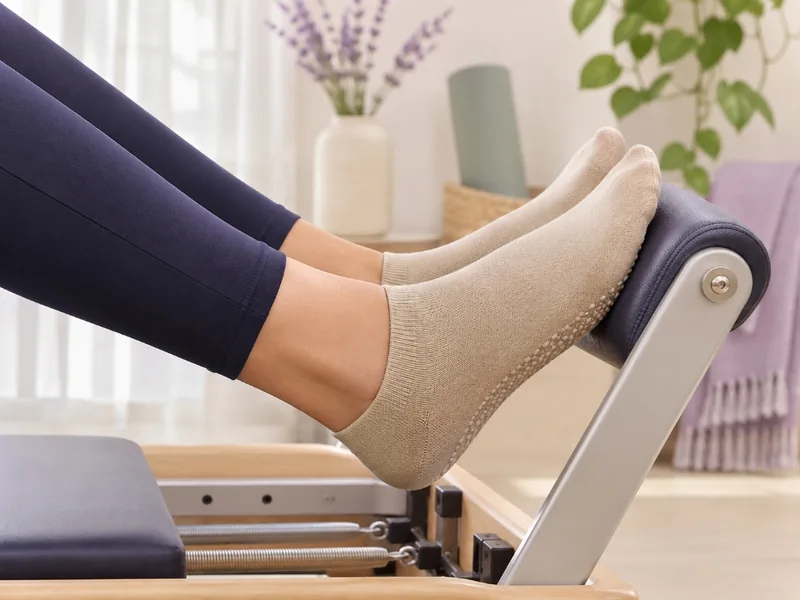
Check 3: Are the sole grip dots aligned under the ball and heel?
Before stepping onto the machine—and again after 20 minutes of movement—check where the circular dots actually sit under weight-bearing zones. If dots wrap too far up the side walls or stop short of the ball of the foot, note the exact offset in millimetres so your sole grip layout brief can be adjusted before bulk production.
Check 4: Is the cuff comfortable and free of tight marks after class?
At the end of the session, inspect the ankle and lower calf right after taking the socks off. On the low-cut mesh style, confirm the front ankle opening does not rub during dorsiflexion. On the ribbed crew style, check that the ribbed leg stays upright without rolling down or leaving deep elastic indentations.
4. Fillable two-style Reformer sample trial table
Print or copy the table below for your instructors. Record the wearer's actual foot length in centimetres alongside each observation so size adjustments stay objective.
| Class checkpoint | When to test on the Reformer | Low-Cut Mesh sample notes | Ribbed Crew sample notes |
|---|---|---|---|
| Tester & size tested | Before class (record foot length in cm & sample size) | [ Size / Foot cm: ________ ] | [ Size / Foot cm: ________ ] |
| 1. Heel slip / collar hold | Footwork, tendon stretch, heel lowers on footbar | [ ] Held cleanly [ ] Slipped Notes: ________________ | [ ] Held cleanly [ ] Slipped Notes: ________________ |
| 2. Forefoot twist / bunching | Feet in straps, scooter, standing carriage lunges | [ ] Centred [ ] Twisted Notes: ________________ | [ ] Centred [ ] Twisted Notes: ________________ |
| 3. Sole grip dot alignment | Ball of foot on bar, heel pushes, standing platform | [ ] Aligned [ ] Offset Adjust zone: ___________ | [ ] Aligned [ ] Offset Adjust zone: ___________ |
| 4. Cuff comfort & recovery | End of 50-min class (check ankle & calf marks) | [ ] Comfortable [ ] Tight/loose Notes: ________________ | [ ] Comfortable [ ] Tight/loose Notes: ________________ |
| Post-wash fit & grip check | After 1 cold wash & air dry (compare to unworn pair) | [ ] Pass [ ] Revise Notes: ________________ | [ ] Pass [ ] Revise Notes: ________________ |
| Final studio decision | Sign-off for opening order | [ ] Approve [ ] Revise [ ] Skip | [ ] Approve [ ] Revise [ ] Skip |
5. What to check after one studio wash
Before you sign off the sample, wash one worn pair using the exact care instructions you plan to print on your retail band or hangtag, then lay it flat beside the unworn sample pair from the same batch. Check three things: whether the foot length tightened enough to pull the heel forward, whether the cuff rib recovered its shape, and whether the sole dots remain clean and evenly seated. If your studio requires a specific wash or adhesion test protocol, agree the method and acceptance criteria in writing before bulk production.
6. Turning class notes into a factory sample sign-off
Once your instructors pick the winning silhouette—or confirm that your opening range needs both a crew and a low-cut option—send back the completed checklist with clear photos of any requested tweak (such as slightly longer heel tab, adjusted dot boundary or logo height on the cuff). Review our samples and MOQ guide to confirm your per-style, per-colour and per-size quantities, and when you are ready to collect supplier pricing on that approved spec, use our wholesale Pilates sock quote comparison guide.
Frequently asked questions
Should a studio test grip socks on both the Reformer footbar and the carriage?
Yes. Footwork on the padded footbar tests heel hold and toe-zone dot placement, while carriage standing work and lunges reveal whether the forefoot twists around the foot. Testing both in one class gives a realistic sign-off record.
Are low-cut mesh or ribbed crew socks better for Reformer Pilates?
Neither silhouette wins for every studio. Low-cut mesh feels lighter at the ankle and appeals to members who prefer minimal fabric, while ribbed crew offers fuller ankle coverage and a larger cuff area for studio logos. Let instructors compare physical samples in class before choosing.
How many pairs should a studio sample before placing a bulk order?
One to two sizes per candidate silhouette is usually enough for two instructors with different foot widths to run a real class trial and one wash check. Once fit, sole layout and branding are confirmed, keep one unworn approved sample as the factory reference.
Does a tighter cuff mean better heel stability on a Reformer?
Not necessarily. An overly tight cuff leaves pressure marks without fixing a shallow heel pocket. Heel stability depends on heel-cup depth, arch rib hold and matching the sock size band to the wearer's actual foot length.
What are the standard MOQ and sample lead times once we approve a Reformer style?
For standard grip styles only, the minimum order is 50 pairs per style, per colour and per size, with samples in 10 to 15 working days and bulk production in 12 to 16 working days. Custom constructions, embroidery, custom packaging and shipping transit times are confirmed separately in your quotation.
Next steps
Compare our real studio styles on custom Pilates grip socks, inspect the low-cut mesh and ribbed crew specifications, review samples and MOQ, and request your trial sample pair through the studio quote form.