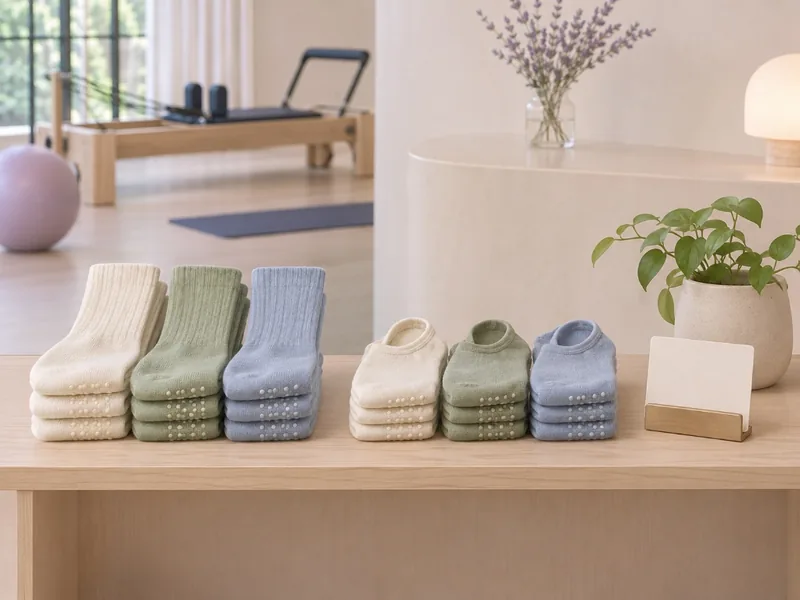
Crew Pilates grip socks cover the ankle and lower leg. That gives you the most visible space for a cuff design or logo, and a crew suits members who want a fuller sock. Low-cut socks sit at the ankle and have a smaller artwork area, so the brand often lives on the pack. Cross-strap socks add straps across the top of the foot. They are a different construction: on our site they are a candidate you develop from a reference and a sample, not a catalogue style. For most studios, the practical first range is one crew and one low-cut style. Add cross-strap only after its sample has been approved.
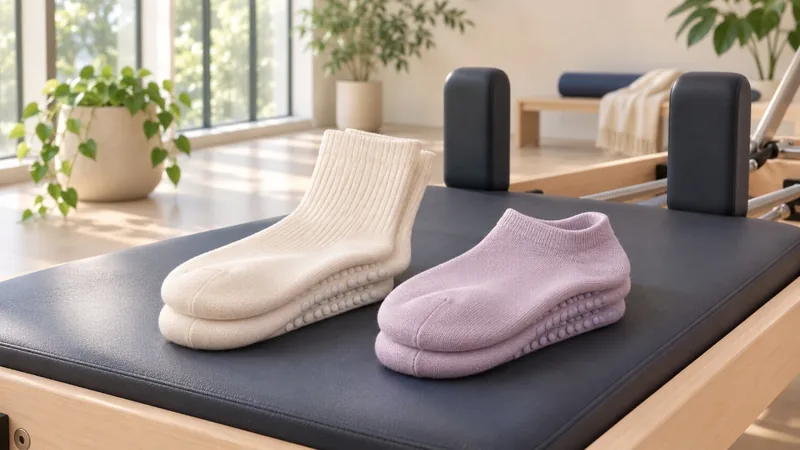
This guide is for studio owners and wellness brands deciding which custom Pilates grip socks to offer. It compares the three silhouettes buyers ask about most. Quantities and retail planning are covered in our first studio order guide; wholesale terms are on the studio wholesale page.
Our current Pilates references are a ribbed crew, a striped crew and a low-cut mesh style. Cross-strap is not a confirmed catalogue style: it needs a reference and a feasibility review before it can be sampled. Fit, yarn, branding and grip details are confirmed through the quotation and an approved sample. We make no grip-performance claims for any silhouette. For standard grip styles only, the minimum is 50 pairs per style, per colour and per size. Other constructions, including a new cross-strap construction, are quoted separately.
1. The three silhouettes at a glance
| Silhouette | Where it sits and what it shows | Status on our site |
|---|---|---|
| Crew | Covers the ankle and lower leg; the cuff and leg are visible above the foot and can carry stripes or a logo. | Current references: ribbed crew and striped crew. |
| Low-cut | Sits around the ankle with a smaller opening; little sock is visible above the foot. | Current reference: low-cut mesh. |
| Cross-strap | Adds straps across the top of the foot, usually as a visible design feature. | Candidate construction: send a reference for feasibility and sampling. |
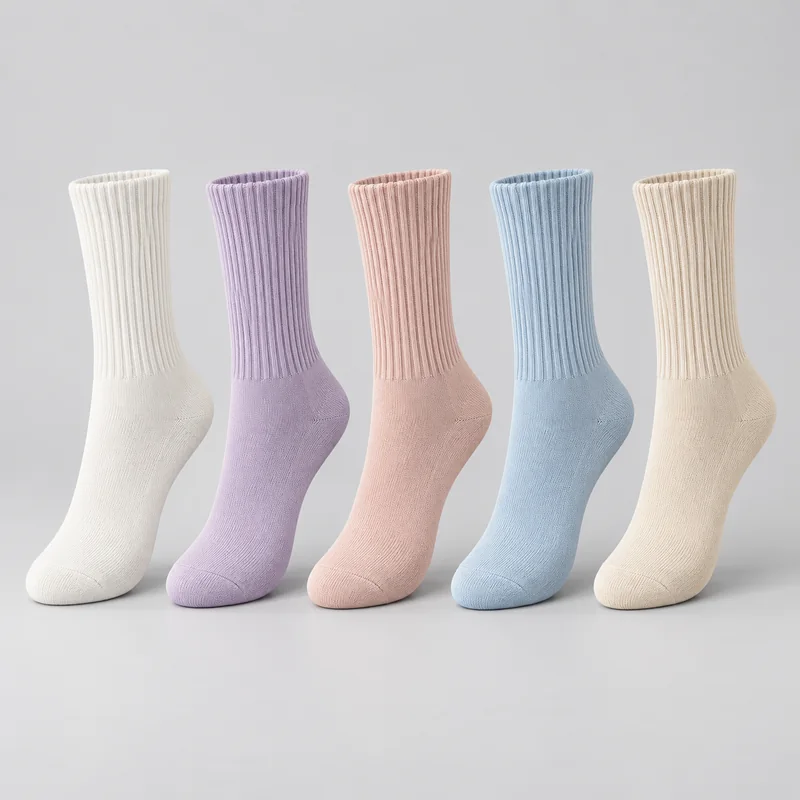
Custom Ribbed Crew Yoga Grip Socks
A closed-toe ribbed crew style with circular sole grip dots. Plan pastel colours, XS to L sizes and branded packaging for studio and wellness retail.
View Product Details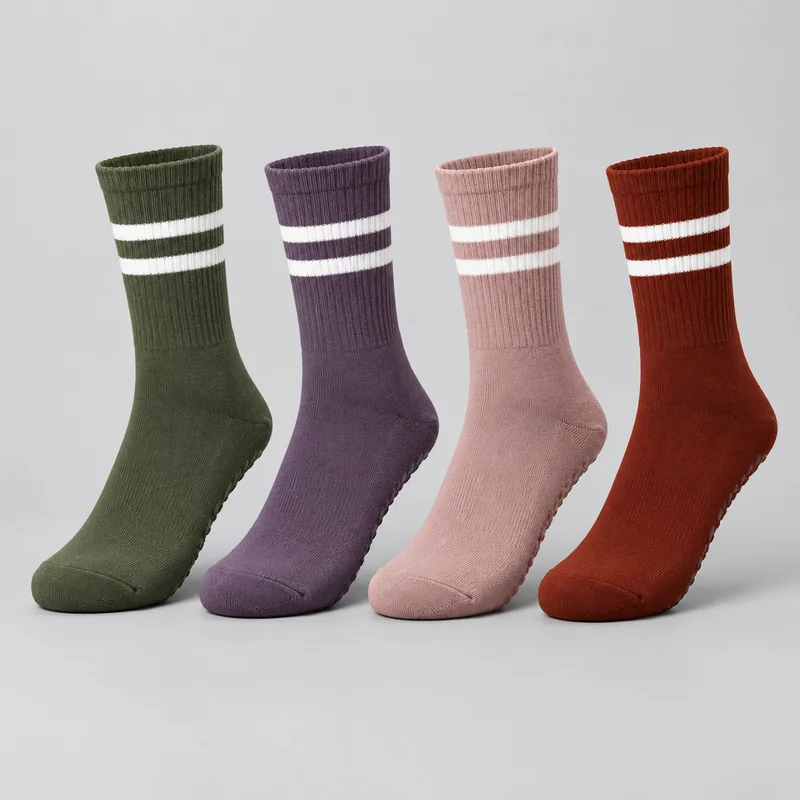
Custom Striped Crew Yoga Grip Socks
A ribbed crew style with two contrasting cuff stripes and circular sole grip dots. Plan custom colours, S to XL sizes and branded studio retail packs.
View Product Details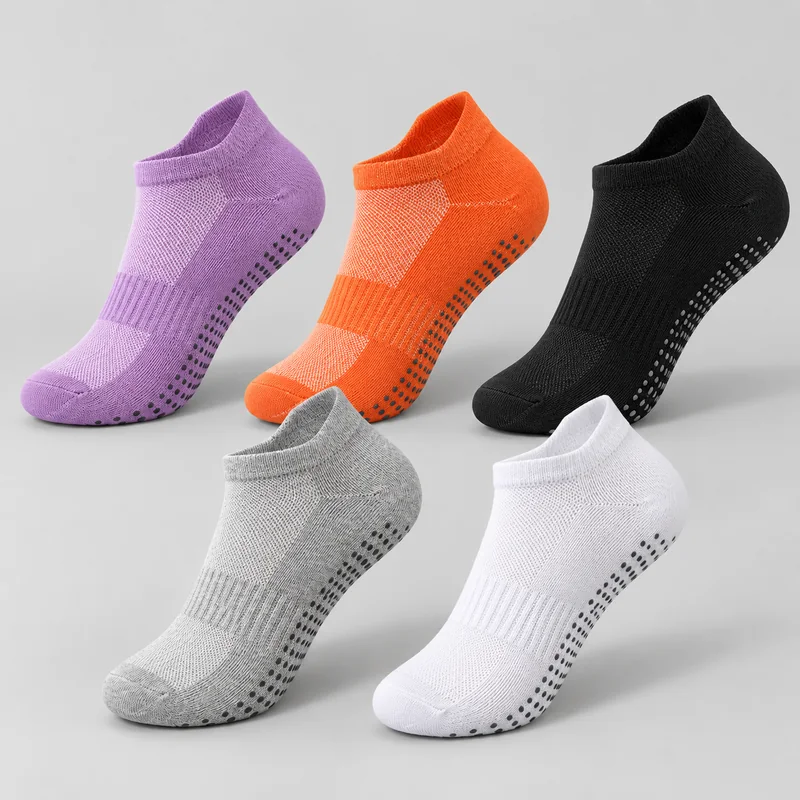
Custom Low-Cut Mesh Yoga Grip Socks
A low-cut style with mesh-knit zones, ribbed midfoot and circular sole grip dots. Develop custom colours, XS to L sizes and branded studio retail packs.
View Product Details2. Crew: the most visible branding space
A crew sock puts a band of knit above the shoe line, or above the foot when worn barefoot in class. For a studio, that is the most useful branding area:
- Ribbed crew. Closed toe, ribbed leg and circular sole dots. The ribbed crew page suggests visible cuff or leg branding and plans sizes from XS to L.
- Striped crew. Two contrasting cuff stripes that can be matched to studio colours, with S to XL size planning. Coordinate the stripes and logo as one design.
On the sample, check whether the logo stays readable when the rib stretches over different calf sizes, and where the cuff sits on the smallest and largest feet you plan to stock. A taller cuff does not by itself establish better grip.
3. Low-cut: a smaller sock, a smaller canvas
A low-cut sock suits members who prefer less fabric around the ankle. The low-cut mesh style combines a closed toe, mesh-knit zones, a ribbed midfoot and circular sole dots, with XS to L size planning. Two practical differences from a crew:
- Branding. The visible area is small, so propose a compact mark and put more of the brand story on the hangtag, band or header card.
- Fit. Check the opening hold and heel fit as the foot moves through the class. A low opening that is comfortable standing still may move during footwork.
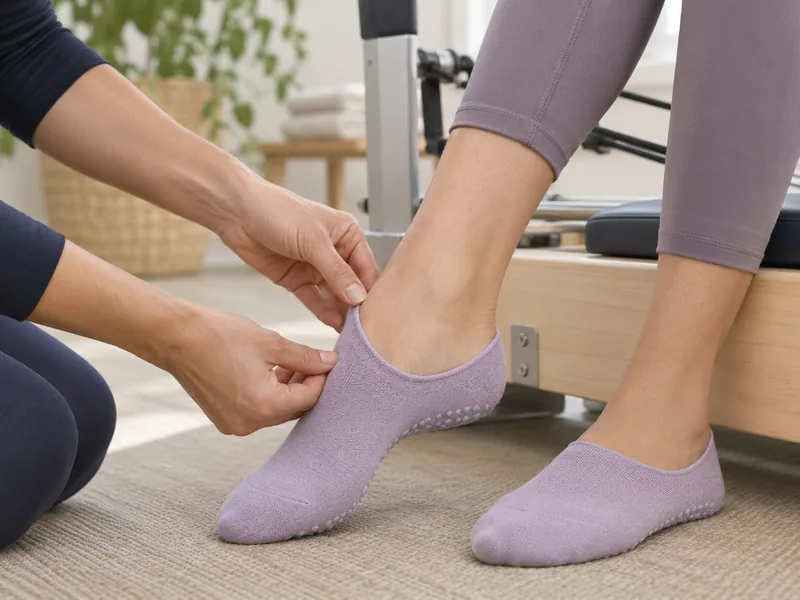
4. Cross-strap: start with a feasibility brief
Cross-strap Pilates socks add straps over the top of the foot. Studios ask about them mainly for their look and for retail differentiation. Because the straps change how the sock is made, worn and packed, a cross-strap style is its own development project:
- Send a reference. A physical sample or clear photos from the top, side and sole, with the strap positions you want.
- Describe the use. Class type, whether the socks are for retail or member use, and the size range.
- Feasibility review. Construction, strap position, how straps behave across sizes and how the sole layout fits the design are reviewed before anything is promised.
- Sample and quotation. If feasible, a sample is made and the construction is quoted separately; the standard grip-style minimum and timings do not automatically apply.
- Fit trial. Check strap pressure across the instep on narrow and wide feet, ease of putting the sock on, and where the straps sit after a class.
Our Pilates product page states that a cross-strap sock is reviewed from your reference and is not a confirmed catalogue style. If the construction changes beyond branding, it follows the advanced studio development route.
5. Comfort and fit checks on the sample
| Silhouette | Check on the sample | Record for the order |
|---|---|---|
| Crew | Cuff feel and height, calf stretch, logo readability when stretched, sole dots under the foot. | Finished leg length and cuff width per size, logo position. |
| Low-cut | Opening hold, heel position during movement, forefoot room, sole coverage. | Opening dimensions, heel and foot length per size. |
| Cross-strap (candidate) | Strap pressure on the instep, ease of putting on, strap position after use, sole coverage. | Approved strap positions and dimensions per size, revision notes. |
Review every silhouette in the intended class with the instructor's equipment guidance. For a range serving men and women, use measured foot-length bands as described in our men's and unisex fit checklist.
6. Matching silhouettes to studio customers
Preferences vary between studios and markets, so ask your own members rather than relying on a general rule. These questions usually separate the options:
- Class use or retail? Class-issue socks favour simple sizing and quick handout; retail socks can carry more design.
- How visible should the brand be? A crew cuff shows the logo in class photos; a low-cut sock keeps it discreet.
- Who are the buyers? A studio with many first-time members may prefer one dependable style; a boutique with regular retail buyers may want a design-led option later.
Track sales and issues by style for a season before deciding whether a third silhouette, such as cross-strap, earns its place.
7. Building a studio combination
Every silhouette is a separate set of colour and size lines, with its own sample and reorder record. A practical sequence:
- Core crew. One crew style in core colours, carrying the studio logo.
- Low-cut alternative. One low-cut style for members who prefer less fabric, often in fewer colours.
- Design-led addition. A cross-strap or other special construction only after feasibility, sample approval and a separate quotation.
For standard grip styles, two styles in two colours and three sizes make 12 lines, and the 50-pair minimum applies to each line. Count lines before adding colours, as in our first studio order guide, and check the margin per line with the studio retail margin guide.
8. What to send with your style brief
| Decision | Include in your brief | Approve on the sample |
|---|---|---|
| Silhouettes | Current references chosen, plus any cross-strap reference photo or sample. | Fit, dimensions and sole layout for each construction. |
| Branding | Logo artwork, position for each silhouette, colour references. | Readability on the knit and the packed presentation. |
| Sizes | Foot-length bands and pairs per style, colour and size. | Finished measurements at both ends of each band. |
| Use | Class issue, reception retail or both; destination and target date. | Pack format for each use and the written order scope. |
The logo and style brief (TXT) lists the same fields in a form you can fill in.
Frequently asked questions
Are crew or low-cut grip socks better for Pilates?
Neither is better for every studio. Crew socks give more visible branding space and a fuller fit around the ankle; low-cut socks are more discreet. Compare both on samples in your own classes and ask members which they prefer.
Do you make cross-strap Pilates grip socks?
Cross-strap is not a confirmed catalogue style on our site. Send a reference photo or sample and it can be reviewed for feasibility, sampled if feasible and quoted as its own construction.
Does the 50-pair minimum apply to a cross-strap style?
The 50 pairs per style, colour and size minimum applies to standard grip styles only. A new construction such as cross-strap is quoted separately after the feasibility review.
Where should the studio logo go on a low-cut sock?
The visible area on a low-cut sock is small, so propose a compact mark and confirm its readability on the sample. Hangtags, bands or header cards can carry the fuller brand presentation.
How many Pilates sock styles should a studio start with?
Many studios start with one crew and one low-cut style. Each additional style adds its own colour and size lines, sample and reorder record, so add styles once sales show demand.
Next steps
Compare the current references on custom Pilates grip socks, plan quantities on the studio wholesale page, and send your style brief, including any cross-strap reference, through the quote form.