Plan custom club socks as two separate lines. The team order is built from the roster: players per size × pairs per player, plus a fixed number of club spares, packed by squad. Retail stock is built from expected demand: sizes your members, parents and fans buy, in individual packs with size, care and barcode labels, reordered from sales. Count minimums for each line separately. Ask whether team and retail pairs of the same sock can share one production line, and keep a separate reorder record for each.
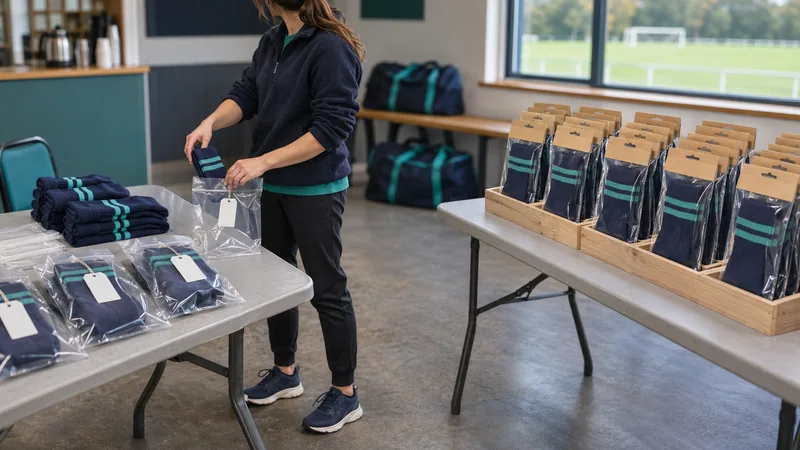
Our club and retail sock page recommends planning the kit line and the retail line separately, and our football club order checklist separates player kit, club-shop stock and seasonal reorders. This guide explains how to plan each line in practice: collecting sizes, setting spares, estimating fan demand, choosing packs and keeping records. It applies to football and other team sports, and to running and cycling clubs that sell club socks.
For standard grip styles, the minimum is 50 pairs per style, per colour and per size, and small quantities in different sizes do not combine into one minimum. Knee-high kit socks, conventional team socks, running and cycling socks are quoted per order. The worked example below uses assumed squad and sales figures to show the arithmetic only; it is not a recommended order.
1. Two kinds of club sock stock
| Question | Team order (roster) | Retail stock (open sale) |
|---|---|---|
| Who wears them | Named players in registered squads. | Members, parents, supporters and gift buyers. |
| How sizes are known | Collected from each player before ordering. | Estimated from past sales or similar products. |
| Size range | The squads' actual sizes, youth or adult. | Often wider: small children's and large adult sizes too. |
| Packing | Bulk by squad and size, easy to hand out. | Individual retail packs with size, care and barcode. |
| Timing | Before the first match or kit handout. | Before the shop season or a launch event, then reorders. |
| Stock risk | Low, if sizes are collected; spares are a choice. | Higher: unsold sizes stay with the club. |
The same approved sock can serve both. Our club page notes that the club shop can sell the socks players wear if the style, colours and sizes suit both uses. A retail version that needs packaging, barcodes or a different size mix should still be planned as its own line.
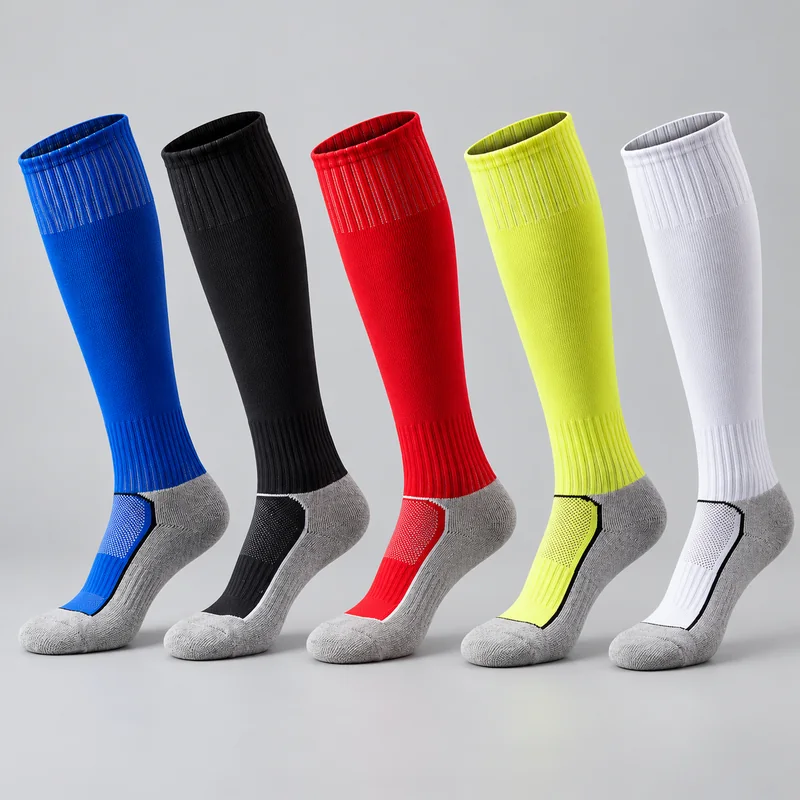
Custom Knee-High Team Socks
Knee-high team socks with ribbed cuffs, grey footbed panels and five colour references. Plan youth and adult sizes, club branding and retail or bulk packaging.
View Product Details →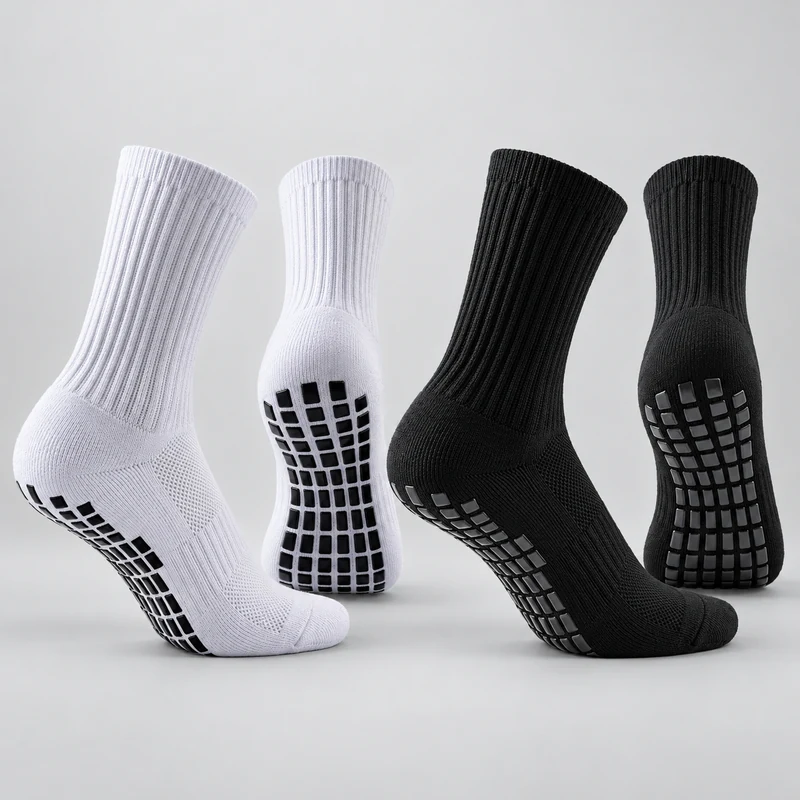
Custom Crew Football Grip Socks
Ribbed crew leg, mesh-knit zones and square-pattern sole pads. Explore team colours, youth-to-adult sizing and retail or bulk packing.
View Product Details →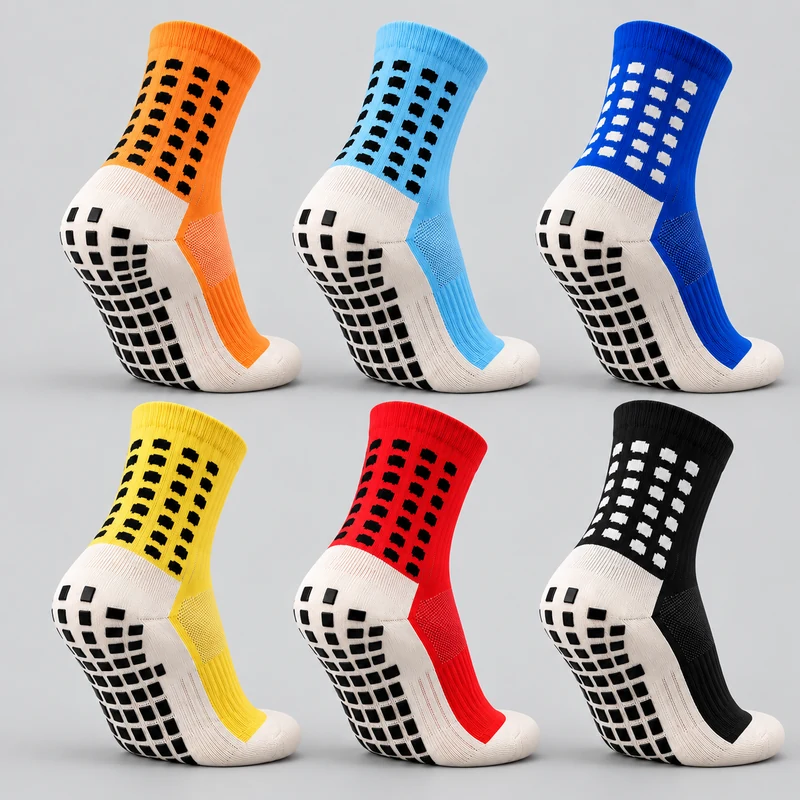
Custom Two-Tone Football Grip Socks
Coloured upper, contrast foot and block-pattern leg detail with sole grip pads. Explore six colourways, custom heights and branded packing.
View Product Details →These are the styles shown on our club and retail page: a knee-high team sock and two football grip styles. Each is quoted for its own construction, colours, sizes and packing.
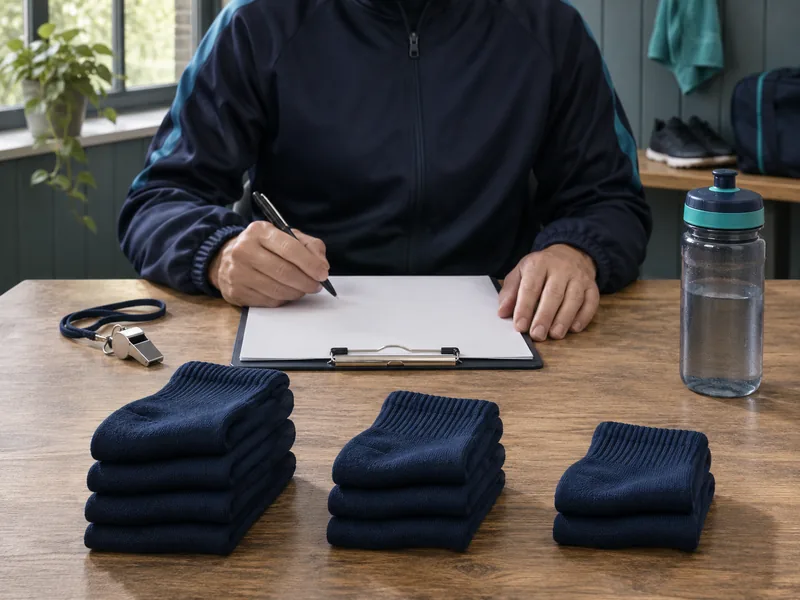
2. Plan the team order from the roster
- Fix the sock. Approve the style, colour and size chart first, ideally after a kit trial. Our team kit trial checklist covers how.
- Collect sizes per player. Use one size reference sheet for every squad. Record squad, size and pairs; do not collect contact details you do not need.
- Decide pairs per player. For example, match pairs only, or match plus training. Apply the same rule to every squad.
- Multiply per size. Players per size × pairs per player, written out for every size. A total number of pairs alone does not tell the factory how to split production.
- Add club spares as their own line. A fixed number per size for new players, lost pairs and guests, held by the club rather than spread across squads.
- Set a cut-off date. After it, size changes go into the spare stock or the next order.
If players wear different kit colours, for example goalkeepers or a change kit, each colour is a separate line with its own size count. Check your competition's kit rules before ordering a different colour.
3. Plan retail stock from demand
Retail buyers are not the squad, so their size curve is different. Supporters and parents often include adults with larger feet and children younger than your youngest squad. To estimate it:
- Use your own sales history from previous club merchandise, by size if you have it.
- Look at your membership: junior and senior members, families, social members.
- Run a pre-order before the season to measure demand by size, and only promise a delivery date once production and freight are confirmed.
- Start narrower than you think. Adding a size later is cheaper than holding slow sizes, especially where each size has its own minimum.
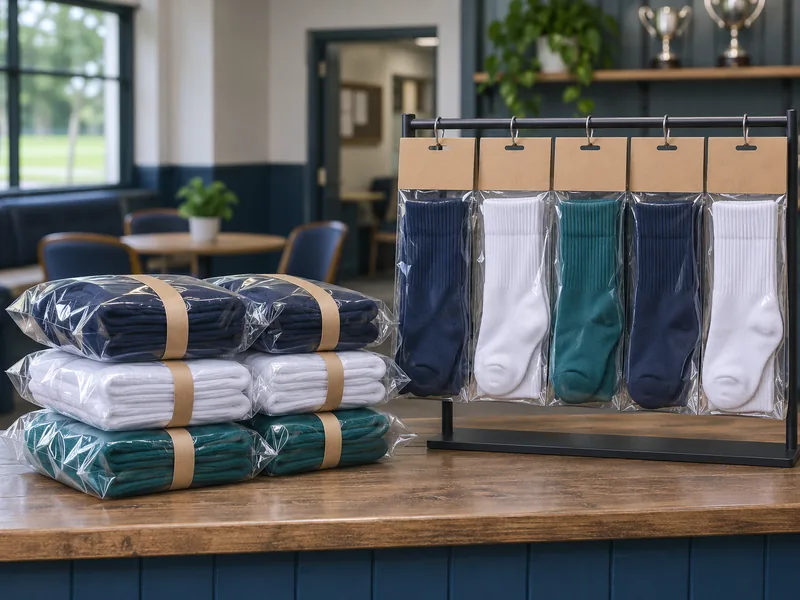
Retail packs need more than team packs: readable size information, care text, a barcode if your shop or online store uses one, and the club's approved branding. Our club page lists hang tags, header cards, belly bands and boxes as options, and asks for the packed sample and a barcode scan to be approved.
4. A worked example with assumed figures
The figures below are invented to show the arithmetic. Assume a club orders a standard grip style in one colour for one squad, with 2 pairs per player and 2 club spares per size:
| Size (assumed squad) | Calculation | Pairs needed |
|---|---|---|
| S: 4 players | 4 × 2 + 2 spares | 10 |
| M: 9 players | 9 × 2 + 2 spares | 20 |
| L: 5 players | 5 × 2 + 2 spares | 12 |
| Team total | 10 + 20 + 12 | 42 |
Assumed squad and spares, chosen only to show the arithmetic. Not a recommended order.
For a standard grip style, each of these sizes is below the 50-pair minimum for that size, and the three sizes cannot be added together to meet it. The club has three practical routes:
- Combine squads that wear the same sock and colour, so each size line reaches the minimum.
- Add retail stock of the same sock in the same sizes, if the quotation confirms that team and retail pairs with the same specification count as one production line. Packing can still differ.
- Choose a style quoted for smaller quantities, and confirm its minimum in the quotation.
Ask the question directly when you request the quote: do team-packed and retail-packed pairs of the same sock, colour and size count as one line or two for the minimum?
5. Pack each line for how it will be used
- Team order: bulk packing by squad and size, with carton labels showing squad, size and quantity, so volunteers can hand out kit quickly.
- Club spares: packed by size and kept separately from squad cartons.
- Retail: individual packs as approved on the packed sample, with cartons labelled by size for the shop.
6. Keep separate reorder records
The two lines are reordered for different reasons, so keep them apart:
| Line | What triggers a reorder | What to send |
|---|---|---|
| Team order | A new season's roster, new squads or spares running low. | Approved sample ID, new size count per squad, pairs per player, arrival date. |
| Club spares | Spare stock in a size falling below the club's set level. | Approved sample ID, pairs per size, combined with the next team or retail order if possible. |
| Retail stock | A size reaching its reorder point from sales. | Approved sample and pack version, pairs per size, arrival date. |
For retail, set a reorder point per size as weekly sales × weeks until stock can arrive, plus a buffer, as in our reorder point calculation. For the team line, start each season from the new roster rather than last season's totals. Our quality and reorders page explains how the approved sample stays the reference for both.
7. Running, cycling and multi-sport clubs
The same split works outside football. A running club might order member kit from a size list, race-day or finisher socks for an event, and a few retail packs for the clubhouse. Our running club and event brief treats club kit, race-day kit and finisher gifts as different order purposes. A cycling club usually orders against a rider size allocation, as on our cycling club brief. A multi-sport club or school should plan each sport's sock as its own construction, as our football and team sports page recommends for basketball and football kit socks.
Frequently asked questions
Should a club order team socks and shop socks together?
They can be quoted together, but plan them as separate lines: team socks from the roster, retail socks from expected demand, each with its own sizes, packing and reorder record.
How many spare pairs should a club order?
That is the club's decision. Set a fixed number per size as a separate spares line, based on how many new players and lost pairs you had last season, rather than adding a few pairs to every squad.
Why can't we combine small sizes to meet the minimum?
For standard grip styles, the minimum applies to each style, colour and size separately. Combining squads or adding retail stock in the same size can help, if the quotation confirms they count as one line.
Do retail socks need different packaging from team socks?
Usually. Team socks are often packed in bulk by squad and size, while retail pairs need readable size, care information and a barcode if your shop uses one. Approve a packed retail sample.
What is the MOQ for club socks?
For standard grip styles, 50 pairs per style, per colour and per size. Knee-high team socks, conventional team socks and other constructions are quoted per order.
Next steps
Compare the styles on club and retail socks, coordinate several squads or clubs on teamwear programs, and send your roster size count, spares and retail sizes through the quote form.