Choose football grip socks by trialling samples as part of the whole kit, not by comparing photos. Test them inside players' own boots, under the team socks or sleeves and shin guards they actually wear, on the smallest and largest sizes in the squad, in training first and then in a match-day setting. Record the feedback in the same way for every player, then approve one sample version for the order and future reorders.
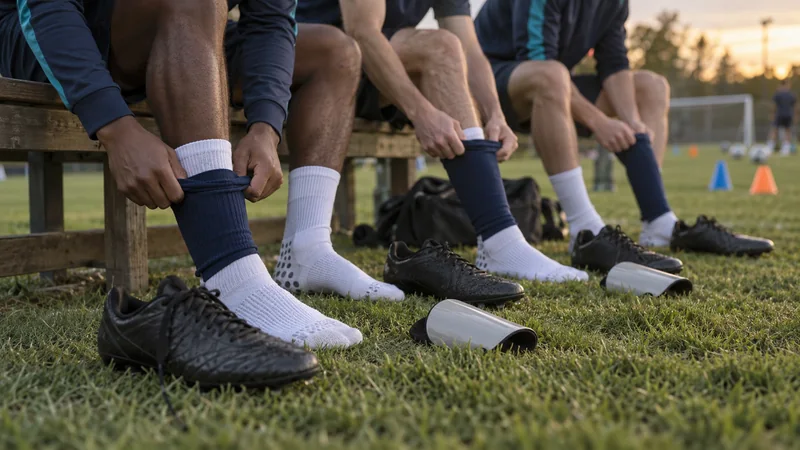
In the US the sport is soccer; in the UK, Europe and much of the world it is football. Either way, this guide covers association football — not American football. It is written for clubs, academies, schools and teamwear suppliers who already know they want grip socks and need to decide which construction to order. For the commercial side of multi-club supply, see our teamwear program page; for the product range, see custom football grip socks.
Use the fillable team trial worksheet →
A grip sock trial checks fit, layering, appearance and player feedback for one construction. It cannot prove that a sock improves performance, prevents injury or behaves the same in every boot, and we make no such claims. Grip materials, test methods and acceptance criteria are agreed for each project. Competition kit rules are set by the Laws of the Game and by your league or competition, so confirm them before you order.
1. Treat the grip sock as part of the kit
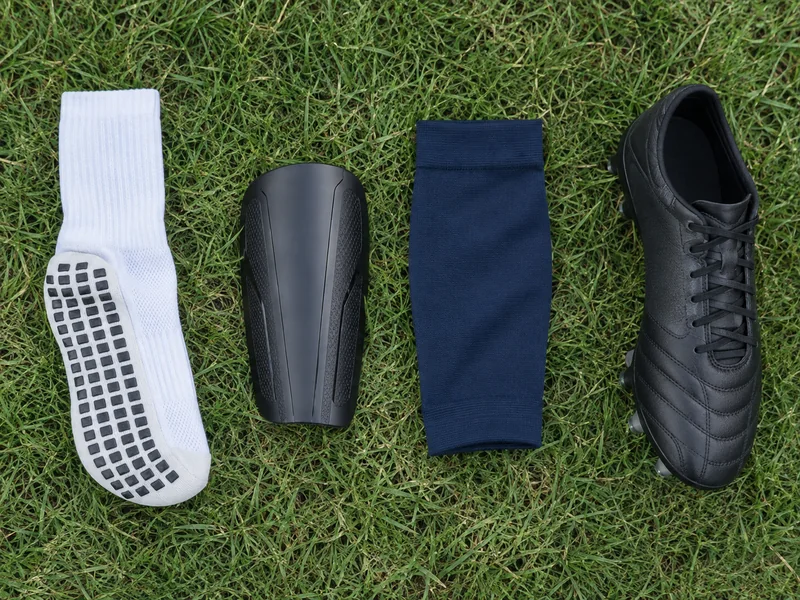
A grip sock is rarely worn alone. A typical match-day setup has several layers, and each one affects the others:
- Boot — the internal volume is fixed; a thicker sock uses more of it.
- Grip sock — the layer in contact with the boot lining and the foot.
- Shin guard — sometimes held by a sleeve, tape or the team sock itself.
- Team sock or footless sleeve — a full sock pulled over the grip sock, or a cut sock or sleeve that leaves the grip sock visible between boot and calf.
- Tape — used by some players to hold everything in place.
The Laws of the Game list socks and shin guards as compulsory equipment. Shin guards must be covered by the socks, and any tape or material applied or worn externally must be the same colour as the part of the sock it covers (IFAB Law 4). If players wear a grip sock under a cut team sock or sleeve, the visible grip sock colour is therefore a kit decision, not only a style choice. Leagues and competitions may add their own requirements, so check with the competition before you finalise the colour.
2. Shortlist two or three sample styles
A trial works best when players compare a small number of clearly different constructions. Our three live football grip styles differ in sole pattern and leg design:
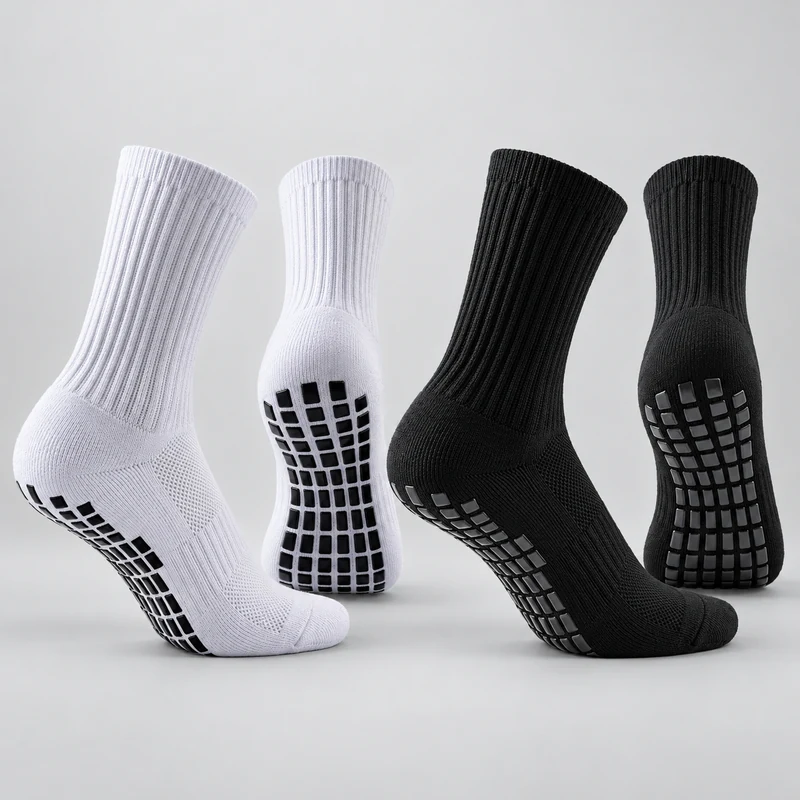
Custom Crew Football Grip Socks
Ribbed crew leg, mesh-knit zones and square-pattern sole pads. Explore team colours, youth-to-adult sizing and retail or bulk packing.
View Product Details →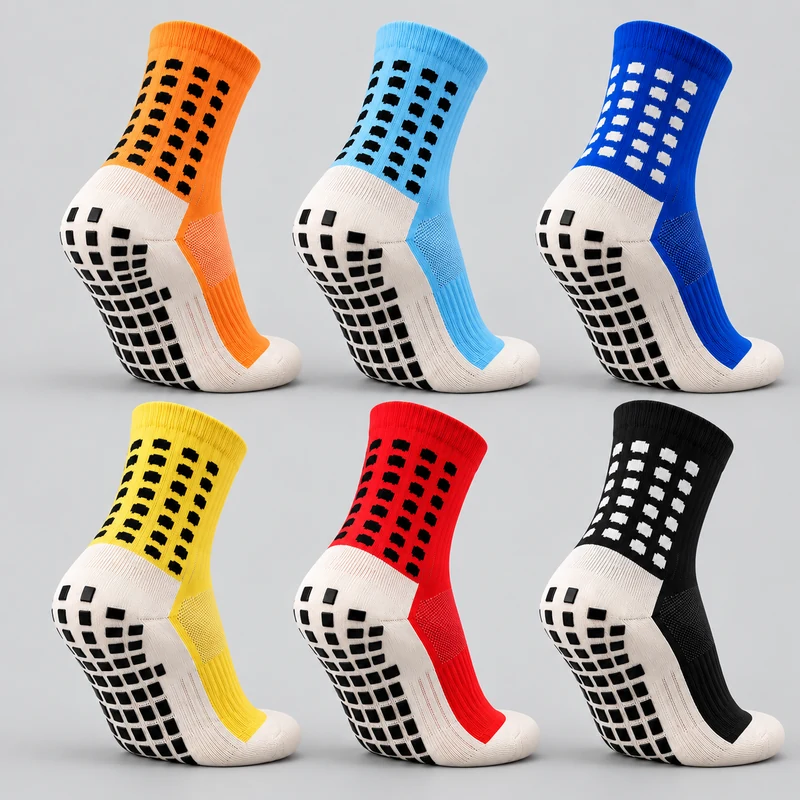
Custom Two-Tone Football Grip Socks
Coloured upper, contrast foot and block-pattern leg detail with sole grip pads. Explore six colourways, custom heights and branded packing.
View Product Details →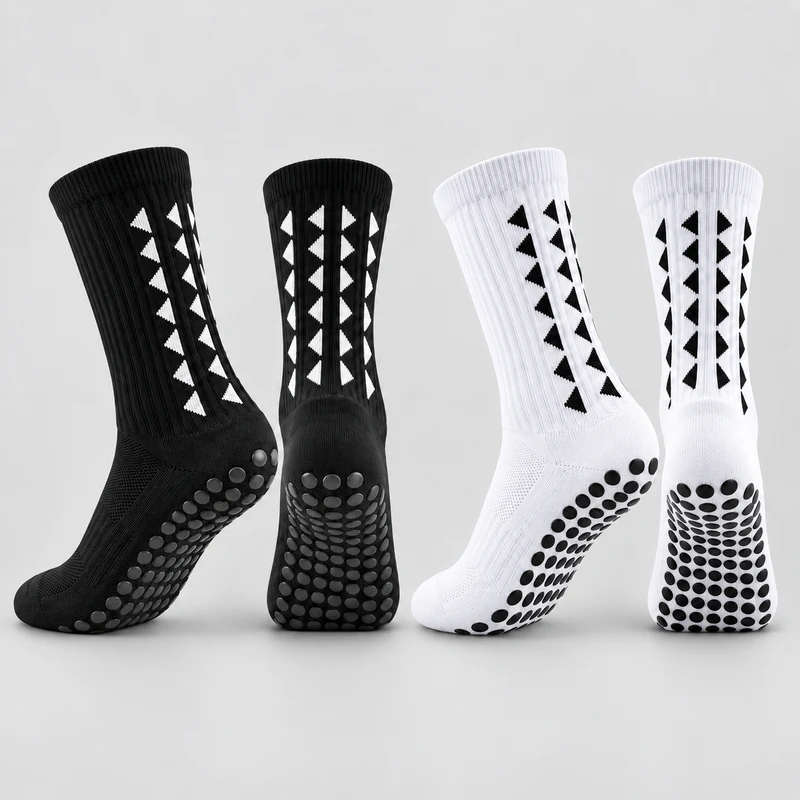
Custom Round-Dot Football Grip Socks
Round sole pads, contrasting triangle knit detail and a ribbed crew leg. Plan team colours, youth-to-adult sizes and branded packs.
View Product Details →The crew style uses square-pattern sole pads and a ribbed crew leg; the round-dot style uses round sole pads with a triangle knit motif; the two-tone style combines a coloured upper with a light-coloured foot, and its height illustration shows options from no-show to knee-high. When you pick trial samples, decide in advance which question each sample answers — for example, "square pads or round pads?" or "white foot or team-colour foot under our sleeves?" — rather than sampling everything at once.
3. Check boot space before anything else
Boot volume, sock thickness, cushioning and foot size all differ between players, so one construction should not be assumed to fit every boot. Ask each trial player to:
- Wear the sample in their own match boots, laced the way they normally lace them.
- Check toe room, heel hold and pressure over the instep before moving.
- Note whether the boot feels tighter than with their usual sock. If it does, the sock may be too thick for that boot, or the sample size may be wrong.
- Repeat with training boots or turf shoes if the same sock will be used in both.
A sock should complete a suitable boot fit. It cannot correct a boot that is the wrong size or shape.
4. Test layering with team socks, sleeves and shin guards
Run the trial with the exact layering your players use. Two common setups need different checks:
| Setup | What to check | Decide before ordering |
|---|---|---|
| Full team sock over the grip sock | Total thickness inside the boot, bunching at the ankle and whether the grip sock cuff creates a ridge under the team sock. | Whether a shorter grip sock height or thinner construction is needed for this setup. |
| Cut team sock or footless sleeve | How far the grip sock cuff overlaps the sleeve, whether a gap appears during play and how much grip sock colour is visible. | Grip sock height and colour, checked against your competition's kit requirements. |
| Shin guard position | Whether the guard sits where players want it and stays covered by the sock or sleeve. | Whether any separate sleeve or tape remains part of the kit. |
5. Check where the grip sits on every size
Sole pads are placed on a sock that stretches over different foot lengths. A layout that sits well under the forefoot and heel on a medium size can sit differently on the smallest youth size or the largest adult size. On each sample size, check:
- Where the pads sit relative to the ball of the foot and the heel when the sock is worn, not only when it lies flat.
- Whether coverage and spacing look consistent between sizes.
- Whether any pads end up on the sides of the foot or under the toes in a way players notice.
Pad placement, spacing and coverage are approved for each size on the sample. Any change to the pattern needs its own sample approval.
6. Pick a trial group that represents the squad
How many players to include is the club's decision, but the group should cover the range of the order rather than the most convenient players. Include:
- The smallest and largest foot sizes you plan to order, plus a middle size.
- Youth and adult players if the order covers both.
- Players who wear full team socks and players who wear cut socks or sleeves.
- A range of boot types and fits, including players with wider feet.
Label every sample pair with the style, size and a short code, so feedback can be matched to the exact sample later.
7. Run training first, then a match-day check
Ask players to wear the samples in at least one normal training session before any match use. If the sample passes training, check it again in a match or match-intensity session with the full kit. Use the same short form for every player:
| Stage | What players record | What the coach or buyer records |
|---|---|---|
| Before activity | Fit in the boot, pressure points, cuff position and any bunching. | Sample code, size, boot model and layering setup. |
| During and after training | Whether the sock moved or wrinkled inside the boot, any rubbing, and comfort compared with their usual setup. | Session type, duration, surface and weather. |
| Match-day check | Any change from training, and whether the sleeve or team sock stayed in place. | How the visible kit looks from the touchline, including colour. |
| After washing | Fit and feel after washing according to the proposed care instructions. | Appearance of the knit and sole pads, and any change in size. |
Player feedback is subjective and limited to the trial conditions. If you need measured results, agree the test method and acceptance criteria with the supplier before sampling.
8. Turn the feedback into one approved team version
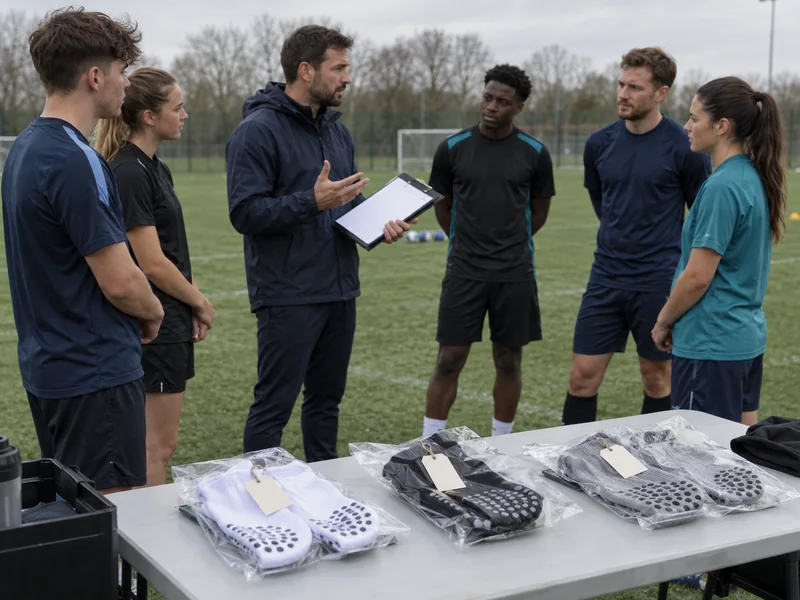
Once the trial points to one construction, close out the decisions so the order can be produced and repeated:
- Construction. The chosen style, height and sole pattern, with any requested change sampled again.
- Size chart. One final chart with finished measurements, agreed on the samples. Size labels in product artwork are planning references only.
- Club identity. Approved crest or wordmark, placement and colour references for each team.
- Allocation. Pairs per player and quantities per colour and size for each squad.
- Reference record. The approved sample code and artwork version, used to check every future reorder.
MOQ and lead time are confirmed against the selected specification. Published standard-grip terms (50 pairs per style, per colour and per size; samples in 10–15 working days; bulk in 12–16 working days) apply only when the final specification is confirmed within that scope. See Samples & MOQ for how lines are counted.
Complete your team sample trial record
Record what happened in the actual boots, layers and session. Add one entry for each tester and sample, then keep the chosen version with the size confirmation record. These notes document a team decision; they do not establish a performance or injury-prevention claim.
Football / soccer grip sock trial record
Use a tester code instead of a player name. Record the sample, boots, layering and conditions together, so feedback can be traced to the exact setup. Repeat for the sizes represented in your squad.
Entries stay in this page and are not sent to us or saved by this tool. Download your record before leaving. All fields are optional; blank fields remain unconfirmed.
Start with the details you know.
This is a planning record, not a quotation or supplier approval. To discuss it, copy the relevant entries into the quote form, or print to PDF and attach that file there.
Frequently asked questions
Are soccer grip socks and football grip socks the same thing?
Yes, for association football. Soccer is the common US term and football the UK and European term. This guide does not cover American football.
Do grip socks improve performance or prevent injuries?
We do not make those claims. A trial can tell you how a construction fits and feels in your players' boots and kit; it cannot prove performance or injury outcomes.
Can players wear grip socks under team socks or sleeves?
Many do. Trial the exact setup, because a full team sock adds thickness inside the boot and a sleeve leaves the grip sock visible. Under IFAB Law 4, external tape or material must match the colour of the sock part it covers, and competitions may set further rules.
How many samples does a team trial need?
That depends on the squad. Cover the smallest, middle and largest sizes in the order, youth and adult players if both are included, and each layering setup your players use. Label every pair so feedback matches the sample.
Can one order cover youth and adult teams?
Yes, with a size allocation for each squad and one agreed size chart. Finished measurements, fit and minimum quantities for each size group are confirmed before production.
Next steps
Compare the three styles on the football grip sock page, check how conventional team socks differ on football and team sports socks, and send your squad list and kit setup through the quote form. If your club also develops a summer running range, compare running sock thickness, cushioning and fit for hot weather in the intended training shoes. If your club also orders cycling kit, our guide to choosing cycling sock cuff height uses the same sample-trial approach.