For hot weather, start with the shoe: how much room it leaves and how open the upper is. Then choose the lowest thickness that still gives cushioning where your runners want it, add mesh-knit zones where the shoe allows airflow, pick a cuff height for the shoe collar, and ask for the confirmed yarn composition. Wear-test two samples side by side in warm conditions before you approve one.
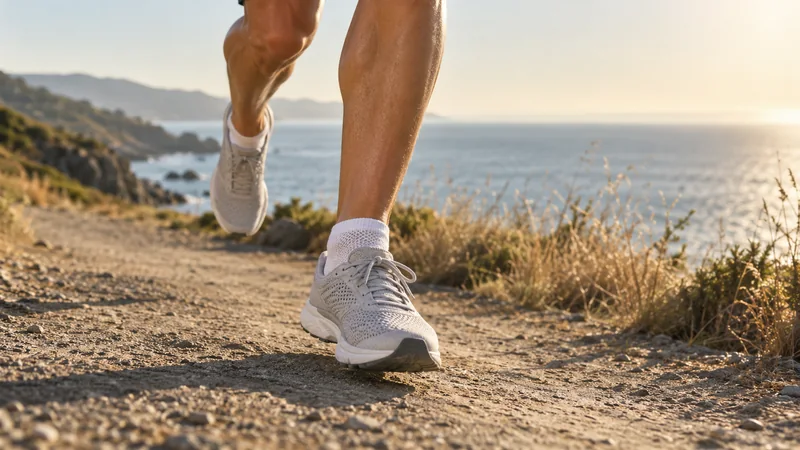
This guide is for running brands, clubs, events and retailers building a summer or warm-climate running sock. It covers the construction decisions you make before comparing suppliers. For the range itself, see our running and training socks.
Words such as "breathable", "cooling", "quick-dry" or "blister-free" describe outcomes that depend on the confirmed yarn, knit structure, shoe and wearer. We do not attach them to any style without an agreed specification and, where you need a claim, an agreed test. The published 50-pair standard grip MOQ does not automatically apply to running socks; MOQ and lead time are quoted for each running construction.
1. What changes when it is hot
A sock that feels fine on a cool morning can feel bulky in summer. Three things change:
- More sweat inside the shoe. The sock holds and releases moisture differently depending on yarn and structure.
- A warmer shoe interior. Heat builds up faster in closed or heavily padded uppers.
- A different feel late in the run. Many runners report that their feet feel fuller in the shoe towards the end of a long or hot run, so a sock that fits at the start may feel tighter later.
None of these is solved by thickness alone. They are the reasons to test the sock in the shoe and climate it is designed for.
2. Thickness: start from the shoe's available volume
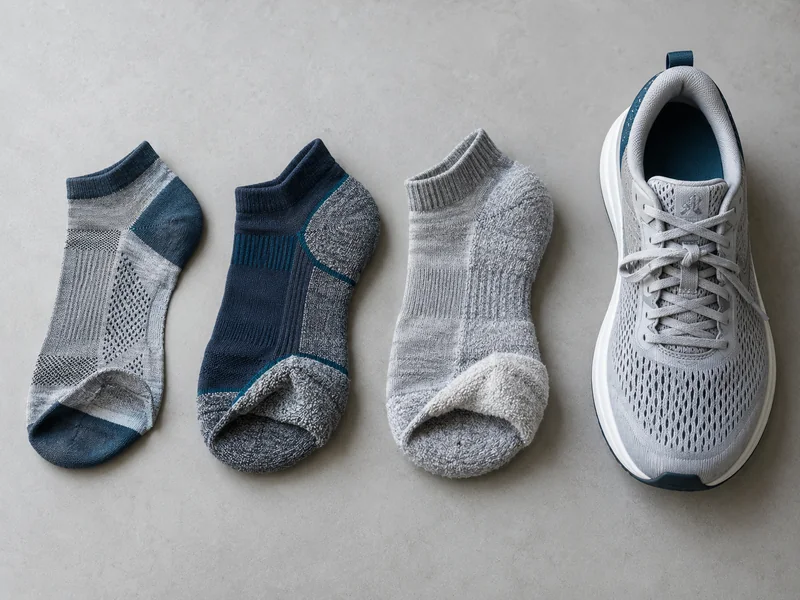
A running shoe has a fixed internal volume. A thicker sock takes up more of it, a thinner sock less. Warm-weather ranges often lean thinner, but "thinner is better" is not a rule — some runners want padding under the forefoot for long distances, whatever the temperature.
| Build | Typical tendency | Check on the sample |
|---|---|---|
| Thin, no added cushioning | Uses the least shoe volume; little padding at pressure points. | Whether the shoe now feels loose, and whether runners want padding at the heel or forefoot. |
| Thin base with zoned cushioning | Adds knit only at selected areas such as the heel or ball of the foot. | That the cushioned zones sit where runners expect them on every size. |
| Full cushioning | More padding throughout; uses more shoe volume and may feel warmer, depending on yarn and structure. | Fit inside the intended shoe late in a warm run, not only when first put on. |
Typical design tendencies, not guaranteed outcomes. Confirm the exact construction in the intended shoe.
3. Place cushioning where it is needed
Cushioning in a sock is usually created with terry loops or a denser knit in selected areas. For a hot-weather sock, the useful question is where, not how much. Decide with your target runners:
- Heel — common for runners who land heel-first or feel the heel counter.
- Forefoot — the ball of the foot carries load on longer runs.
- Arch — a ribbed arch section changes how the sock holds the midfoot; it is a fit feature, not a medical support.
- Toe and heel reinforcement — areas of extra yarn where wear is expected, specified separately from cushioning.
Specify each zone in the brief and approve its position on the sample. Our running page lists cushioning, ventilation and arch-structure options as part of the customization process.
4. Mesh and ventilation zones
Mesh knit creates a more open structure in selected areas, usually over the top of the foot. Whether runners feel a difference depends on the yarn, the size of the mesh zone and how open the shoe upper is: a mesh zone under a closed, padded upper may make little difference. Two of our live running styles use mesh-knit zones:
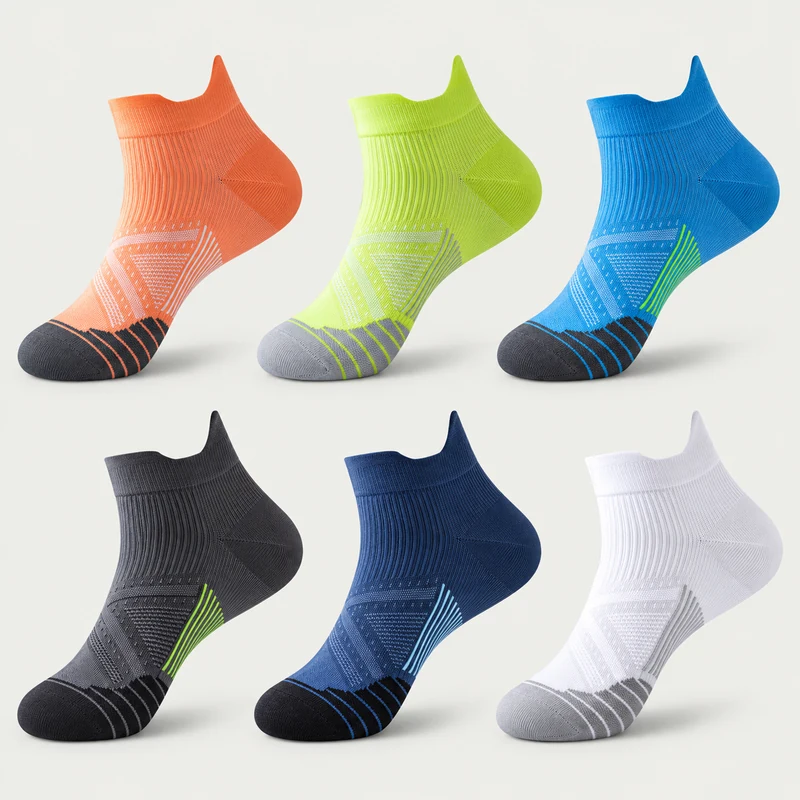
Custom Ankle Tab Running Socks
Low-cut silhouette, raised heel tab and mesh knit zones. Explore six shown colourways with custom sizing, branding and packaging options.
View Product Details →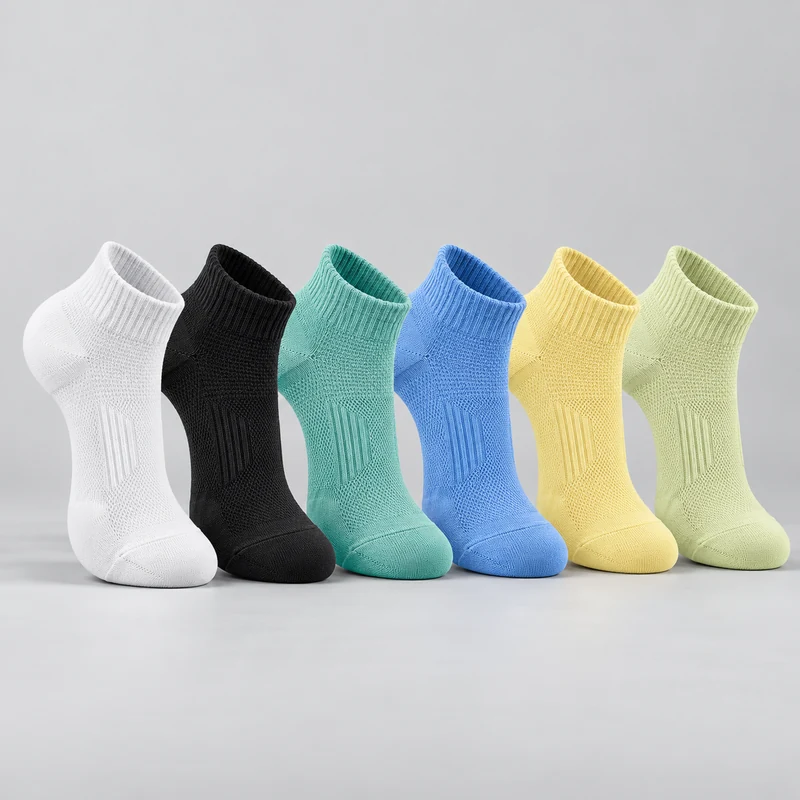
Custom Low-Cut Mesh Running Socks
Plain low-cut cuff, mesh-knit body and ribbed arch section. Plan core colours, seasonal shades, sizes and private label packs.
View Product Details →The ankle-tab style combines a low-cut profile, raised heel tab, ribbed midfoot and mesh knit zones. The low-cut mesh style has a plain low-cut ribbed cuff, a mesh-knit body and a ribbed arch section. Neither page states a fixed yarn composition; that is confirmed for your specification.
5. Cuff height and fit in the shoe
For warm-weather ranges, cuff height is mostly about the shoe collar and the look you want:
- Low cut — sits low around the ankle with minimal visible sock. Check that the cuff stays above the shoe collar at the back during a run.
- Ankle with heel tab — a raised tab at the back sits above the shoe collar. Check that the tab position suits the shoe heights in your range.
- Taller styles — such as our knee-high running socks, which some runners choose for reasons other than temperature. For knee-high styles, include calf and leg measurements in the brief, and agree any compression assessment before making related claims.
Whatever the height, check cuff hold, heel position and stretch on the physical sample across your planned sizes. For a full comparison of heights, see ankle vs crew running socks.
6. Yarn: ask for the composition, then test
Running socks are commonly made from polyester or nylon blends with elastane, and sometimes include cotton or other fibres. As a general textile property, cotton absorbs more water and tends to dry more slowly than polyester or nylon, which is one reason performance running ranges often favour synthetic-led blends. The final behaviour still depends on the blend, the knit and the shoe.
Ask for the full composition by percentage, agree it on the specification and use the confirmed figures on the label. If you want to compare a wool-blend option for cooler months, our guide to merino and synthetic sock blends covers how to compare compositions.
7. Two summers: Australia and the northern hemisphere
Brands selling in both hemispheres face two warm seasons. In Australia, summer runs from December to February; in Europe, the UK and North America, roughly June to August. That affects planning in two ways:
- Launch timing. One approved construction can serve both markets, with different launch dates and colour stories. Plan sample approval and production against the earlier launch.
- Wear trials. When you sample for the northern summer, it may be winter in Australia, and the other way round. Run the wear trial with testers in the market where it is currently warm, or on a treadmill in a warm room, rather than judging a summer sock on a cold day.
Running sock MOQ and lead time are quoted for each construction, so confirm timing in the quotation before fixing a launch date.
8. A hot-weather wear trial for samples
- Use the target shoes. Test in the shoe models your customers or club members actually wear.
- Compare side by side. A simple method is to wear sample A on one foot and sample B on the other during the same run, then swap feet on the next run.
- Run normal sessions in warm conditions. Include at least one run as long as your target customer's usual long run.
- Record the same points each time. Feel at the start and end, any hot spots or rubbing, whether the sock slipped down inside the shoe and where the cuff sat.
- Wash and repeat. Wash according to the proposed care label, then check fit, size and appearance again before approval.
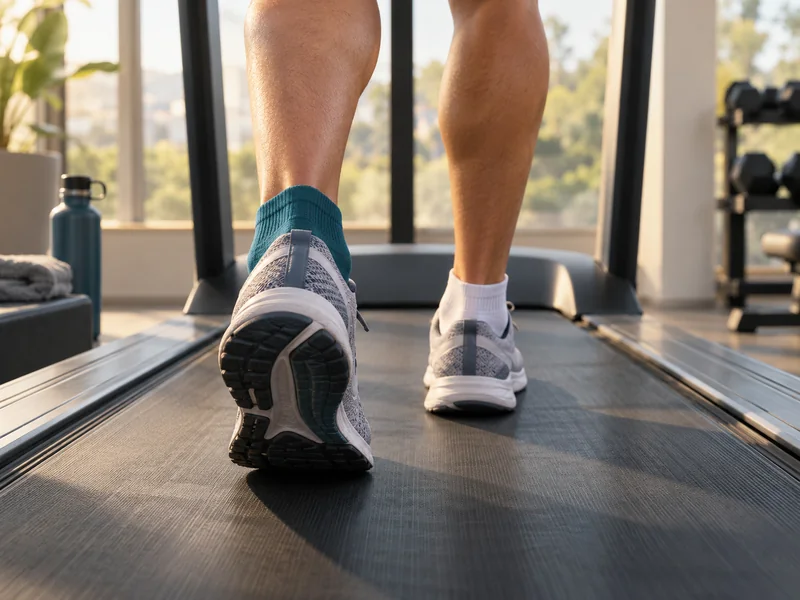
Wear trials record subjective feedback under your conditions. If you need measured results for a product claim, agree the method and acceptance criteria before sampling.
9. What to put in the sample brief
| Decision | Include in your brief | Approve on the sample |
|---|---|---|
| Shoe and climate | Road or trail, intended shoe models, target markets and season. | Fit inside the shoe across the planned sizes. |
| Thickness and cushioning | Base thickness, cushioned zones and any reinforcement. | Position of each zone and feel after a warm run. |
| Mesh and height | Where mesh zones should sit; low-cut, ankle-tab or taller cuff. | Cuff position at the shoe collar and the look of the mesh areas. |
| Yarn and labelling | Preferred fibres, care requirements and any claims you want to make. | Confirmed composition, care label text and the agreed test scope for any claim. |
Frequently asked questions
Are thin socks always better for running in hot weather?
Not always. Thin socks use less shoe volume, but some runners want cushioning at the heel or forefoot regardless of temperature. A thin base with zoned cushioning is a common middle route; confirm it by wear-testing in the intended shoe.
Does a mesh zone make a running sock cooler?
Mesh creates a more open knit in selected areas. Whether runners feel a difference depends on the yarn, the size of the zone and how open the shoe upper is. We do not claim a cooling effect without an agreed specification and test.
Should hot-weather running socks avoid cotton?
Cotton generally absorbs more water and dries more slowly than polyester or nylon, which is why many performance running socks use synthetic-led blends. Ask for the full composition and compare samples in your target conditions.
Low-cut or ankle tab for summer running?
Both are common. A low-cut cuff shows little sock; a raised heel tab sits above the shoe collar at the back. Check which suits the shoe heights in your range and whether the cuff stays in place during a run.
What MOQ and lead time apply to running socks?
Running socks are quoted for each construction after reviewing yarns, colours, sizes and branding. The 50-pair standard grip sock minimum does not automatically apply. Send the pairs needed per colour and size for a quotation.
Next steps
Developing socks for more than one sport? The football team kit trial checklist shows how to record fit and layering feedback for a different footwear setup.
Compare heights and constructions on running and training socks, prepare the size and quantity information on Samples & MOQ, then send your brief through the quote form.