Choose cycling sock cuff height by measurement, not by name. Agree a finished height for each size on the flat sock, then check how that height sits on your shortest and tallest riders, against the bib shorts and shoes in your kit. Place stripes and logos in the area that stays visible above the shoe. If members race in UCI events, check the sock-height rule on the riders themselves.
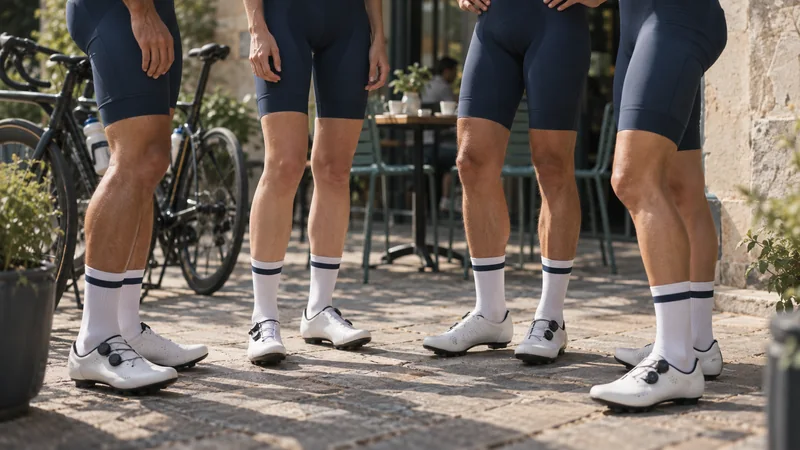
Cuff height is one of the most visible decisions in a club sock, and one of the easiest to get wrong because people describe it differently. This guide covers the height decision only; foot width and cuff tightness are separate fit questions you confirm on the sample. For the product range, see our custom cycling socks.
We treat cuff height as a fit, appearance and rules decision. We do not claim that any cuff height or sock design makes a rider faster. Cycling socks are quoted by construction, colour and size mix, branding and packaging; the published standard grip sock MOQ and lead times do not automatically apply.
1. Why "crew" is not a specification
"Crew", "mid-calf", "quarter" and "tall" are useful in conversation, but they do not mean the same height from one brand to the next. Two crew cycling socks can differ by several centimetres. If your club likes a sock it already owns, send it as a physical reference and state the measurement you want rather than the name.
All three of our live cycling styles are crew-height designs. Each page asks for your preferred cuff height in the brief, so the height is agreed for your version:
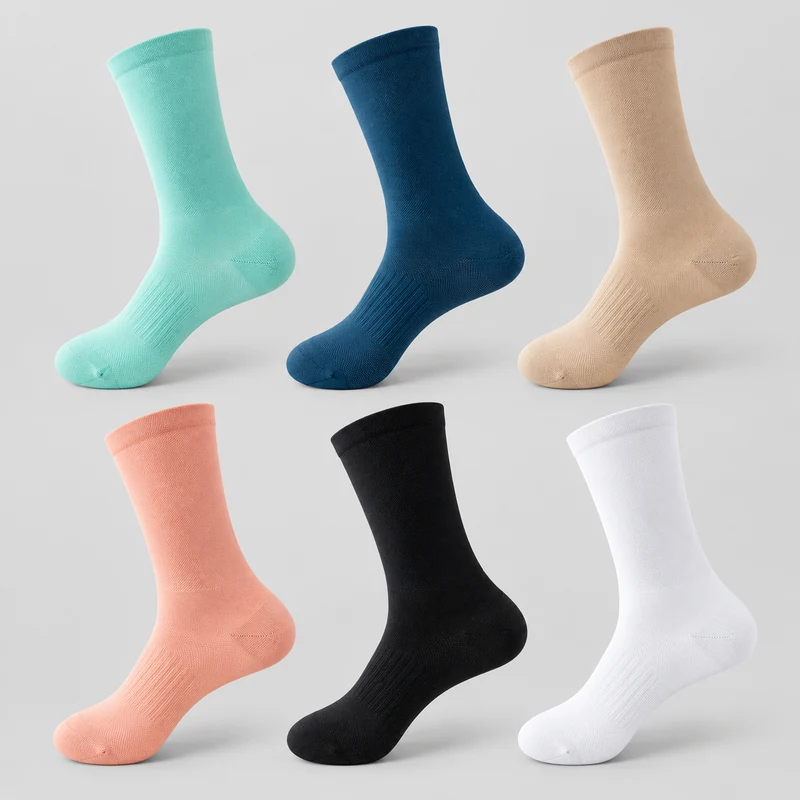
Custom Crew Cycling Socks
Solid colours, a smooth cuff and shaped arch knit. Plan rider sizes, club colours and branded packs for your cycling range.
View Product Details →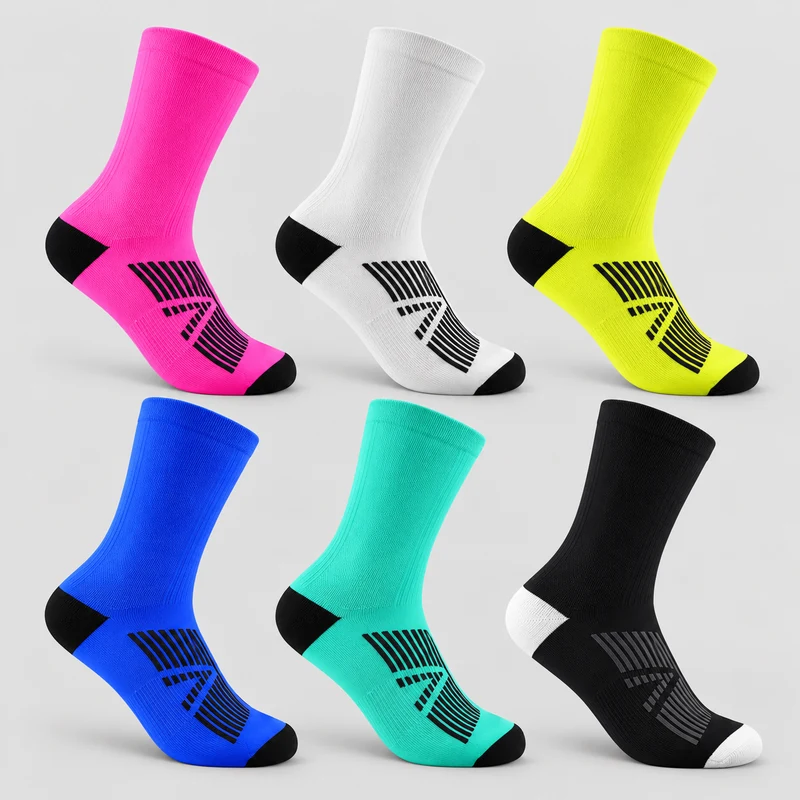
Custom Contrast Cycling Socks
Contrast heels and toes with a geometric arch graphic. Develop rider sizes, club colour combinations and branded packs for your cycling range.
View Product Details →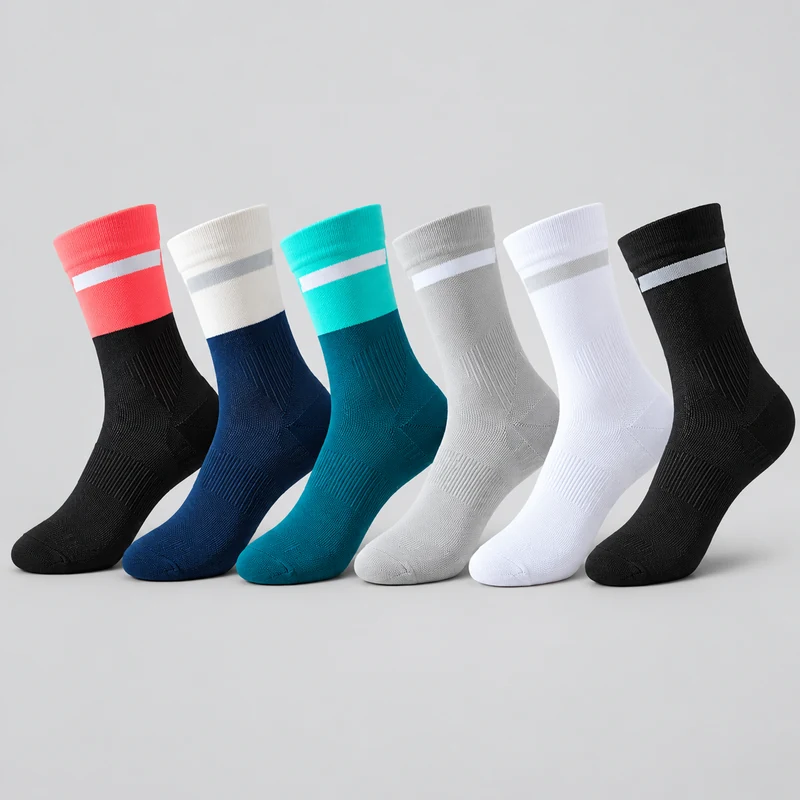
Custom Striped Cycling Socks
A single cuff stripe with colour-block and tonal options. Plan rider sizes, club colours and branded packs for your cycling range.
View Product Details →2. How to measure cuff height
Use two measurements — one for the specification and one for the check on the rider:
- On the flat sock (for the spec). Lay the sock flat with the heel folded naturally. Measure from a defined point — commonly the bottom of the heel fold — straight up to the top edge of the cuff. Write down which point you used, so the factory and your team measure the same way.
- On the rider (for the check). With the sock worn and the cycling shoe on, measure from the floor or from the ankle bone to the top of the cuff. This is the height people actually see.
- Per size. Record the flat measurement for every size, because larger sizes usually have a longer leg.
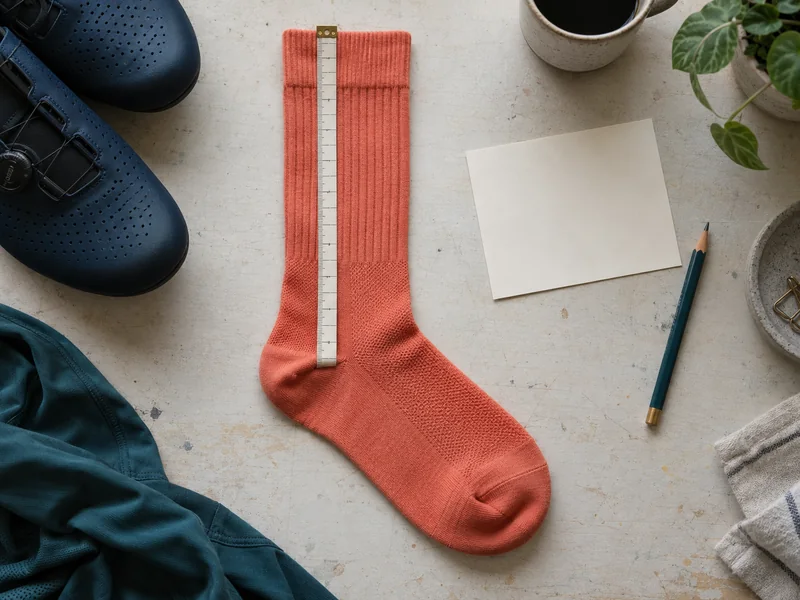
Knitted socks stretch when worn, so the worn height is not a direct conversion of the flat measurement. Confirm both on samples.
3. How one height looks on different riders
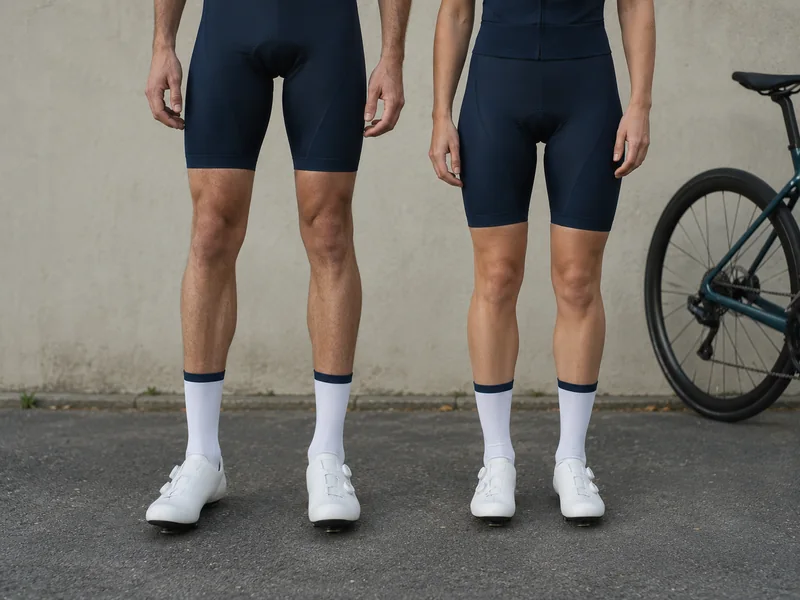
A sock with a fixed leg length sits differently on different people. On a taller rider with long lower legs, the cuff sits relatively lower on the calf; on a shorter rider it can sit close to the widest part of the calf. Calf circumference also changes how far the cuff stretches and where it settles. For riders whose feet or calves feel tight, see cycling socks for wide feet and calves.
Before approving, put the samples on at least your shortest and tallest riders in each size, and on a rider with larger calves. Decide whether you want the cuff to look the same on everyone — which may mean adjusting the leg length per size — or accept some variation in exchange for a simpler size range.
4. Coordinate the height with the club kit
The sock is the last visible piece of the kit between shoe and shorts. Check it as part of the full outfit:
- Bib shorts. Look at the gap between the short leg and the cuff. A taller sock shortens the gap; a shorter sock leaves more skin visible.
- Shoes. The visible sock starts at the shoe collar. High-collar shoes hide more of the lower sock.
- Colours. A cuff stripe or colour block reads best when it relates to the jersey or short colours rather than adding a new one.
- Seasons. If riders wear overshoes in winter, much of the sock may be covered; decide whether a separate winter version is worth a separate specification.
If your club also buys football or other team kit, the same principle applies: approve one version against the full kit. Our club and teamwear page covers multi-kit programs.
5. Place stripes and logos where they stay visible
Cuff height decides where graphics can go. The most visible area is usually the leg between the shoe collar and the cuff, seen from the side and the back. Points to check on the sample:
- Cuff stripes. On our striped style the single stripe sits just below the cuff, so the stripe moves up or down with the cuff height. Specify stripe width and position with the height.
- Arch and foot graphics. On our contrast style the geometric graphic sits around the arch, which many cycling shoes cover. Check what stays visible with your riders' shoes on.
- Logos. Decide whether the club logo sits on the outer side of the leg, the back or both, and check legibility at knitted scale on the smallest size.
For a plain look that lets the cuff height do the work, compare the solid-colour crew style.
6. If members race: the UCI sock-height rule
For competition under UCI regulations, the rules have included a limit on sock height: socks and overshoes used in competition may not rise above half the distance between the middle of the lateral malleolus (the outer ankle bone) and the middle of the fibular head (just below the outside of the knee). Check the current wording in the UCI regulations, and ask your national federation or event organiser which rules apply to your riders.
This matters for planning because the limit is measured on the rider, not on the flat sock. A fixed flat measurement can sit within the limit on a tall rider and above it on a shorter one in the same size. If racing members will use the club sock in competition:
- Check worn height against the rule on the shortest riders in each size.
- Consider a per-size leg length, or a separate race version with a lower cuff.
- Keep the approved flat measurements in the specification so reorders match.
Social and non-competitive club rides are not affected by this rule.
7. Confirm the height on samples
| Decision | Include in your brief | Approve on the sample |
|---|---|---|
| Cuff height | A reference sock or the flat measurement per size, and the point it is measured from. | Flat measurements per size and worn height on short and tall riders. |
| Rider sizes | Target market, foot-length ranges and the club size list. | Fit, stretch and the final EU, UK or US size chart. |
| Kit coordination | Jersey and bib short colours, shoe types, and whether a winter version is needed. | The sock worn with the full kit, viewed from the side and back. |
| Graphics | Stripe width and position, logo artwork, placement and colours. | Graphic position relative to the cuff and shoe, and logo legibility on the smallest size. |
| Competition use | Whether members race, and under which rules. | Worn height checked against the applicable rule on representative riders. |
Different heights are different specifications. A road version and a lower gravel or race version count as separate products, each with its own sample, size lines and quotation. Our customization page lists the height directions available, from no-show and ankle to crew.
Frequently asked questions
What is a standard cuff height for cycling socks?
There is no single standard; names such as crew or mid-calf vary between brands. Agree a flat measurement for each size, measured from a defined point, and check the worn height on your riders.
Does a taller cycling sock make you faster?
We do not make performance claims about cuff height. For a club sock, we treat height as a fit, appearance and competition-rules decision.
How do we make sure club socks meet the UCI sock-height rule?
The rule is measured on the rider, between the outer ankle bone and the fibular head. Check worn height on the shortest riders in each size, consider per-size leg lengths or a separate race version, and confirm current rules with your federation.
Can we order two cuff heights for the same club?
Yes, but each height is a separate specification with its own sample, size lines and quotation. Many clubs start with one height and add a second version once the first is approved.
What MOQ and lead time apply to custom cycling socks?
Cycling socks are quoted by construction, colour and size mix, branding and packaging. The published standard grip sock terms do not automatically apply. Send quantities per colour and size for a quotation.
Next steps
Compare the three styles on custom cycling socks, prepare the size and sample brief on Samples & MOQ, then send your club brief through the quote form. Running a sample trial across a squad? The approach in our team kit trial checklist works for cycling clubs too.