For cycling socks that suit wide feet and larger calves, check four things separately on samples: forefoot width, instep room, how easily the cuff passes over the heel, and how the cuff sits on the calf. Measure trial riders' foot length, forefoot width and calf circumference, then wear-test the samples in their own cycling shoes. If a group of riders does not fit, adjust the stretch, the cuff or the size band through sampling rather than simply ordering the next size up. Do not describe the result as compression or as having a medical benefit.
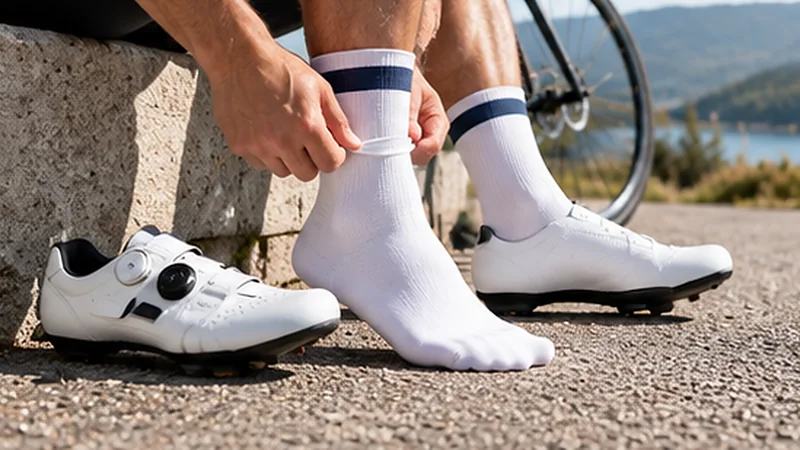
Our cuff height guide covers how tall a club sock should be. This guide covers a different question: why some riders find a sock tight or uncomfortable even when the size label matches their shoe. It is written for clubs, teams and cycling brands ordering one sock for riders of many builds. For the product range, see custom cycling socks.
None of our cycling styles is listed as a wide-fit version. Our cycling pages ask for foot-length ranges and confirm finished sock measurements and stretch on samples, so width and calf fit are reviewed in the same way. This is a fit and comfort guide, not medical advice. We make no compression or circulation claims, and riders with foot or circulation conditions should take advice from a health professional. Cycling socks are quoted by construction, colour and size mix, branding and packaging; the published standard grip MOQ does not apply.
1. Why the right shoe size can still feel tight
Size bands for socks are built on foot length. Two riders with the same foot length can still differ in:
- Forefoot width: the widest part of the foot across the ball, near the toe joints.
- Instep height: how high the top of the foot rises in front of the ankle.
- Heel and ankle size: which decides how easily the cuff passes over the heel.
- Calf circumference: which decides where a crew cuff sits and how firmly it grips.
A knitted sock stretches to fit these differences, but only up to a point. When the stretch is used up, the sock feels tight across the forefoot, the toe seam is pulled across the toes, or the cuff digs into the calf. Treat each of these as a separate check rather than one "tight" complaint.
2. Check the sock inside the cycling shoe
Cycling shoes are usually stiff and closely fitted, and many riders with wide feet already choose wide-fit shoes. The sock has to work in that space:
- Thickness. A thicker or cushioned sock takes up width as well as length. For riders with wide feet, check whether a thinner forefoot leaves more room than a looser size.
- Toe seam. A seam pulled across a wide forefoot can press inside a narrow toe box. Check where it sits on the widest feet in each band.
- Insoles and orthotics. If riders use thicker insoles, test the sample with them.
- Over a ride. Feet can feel fuller later in a long or warm ride. Ask testers to note fit at the start and the end.
Our cycling product pages ask for the intended cycling shoes in the brief for exactly this reason, and the striped cycling style page asks for your preferred fit inside cycling shoes.
3. Foot width and instep room
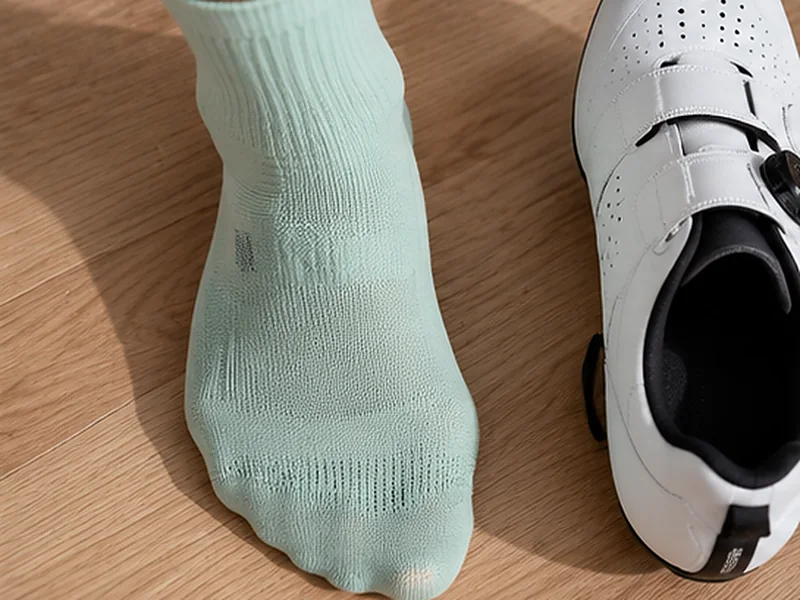
On each sample size, ask testers with wider feet and higher insteps to check:
| Check | What to look for | Possible change to discuss |
|---|---|---|
| Forefoot | Tightness across the ball of the foot, or a visible strain in the knit. | Knit stretch at the forefoot, yarn and elastane content, or band boundaries. |
| Toe seam | Seam pulled across the toes, or pressure at the little toe. | Foot length within the band and toe seam position, reviewed on the sample. |
| Instep | Pressure across the top of the foot, especially with straps or laces tightened. | Stretch across the instep and the position of any ribbed arch section. |
| Heel | The heel pocket sitting too low or too high on a wide foot. | Heel shape and foot length for that band. |
Our cycling styles include features that affect these checks: the crew style has a defined arch-knit area and shaped heel and toe, the striped style has shaped heel and toe areas, and the contrast style has contrast heel and toe panels. The contrast page also lists toe seam feel among the points to approve on the sample. Each is reviewed on the sample for your riders.
4. Getting the sock on: cuff and heel entry
A cuff that holds well on a slim ankle may be hard to pull over a large heel, or may stretch out quickly. Check:
- Whether testers can pull the sock on without forcing the cuff or turning it inside out.
- Whether the cuff recovers its shape after being stretched over the heel.
- Whether the cuff still holds up on the slimmest ankles in the same band, if you plan one cuff for everyone.
Record the cuff stretch you approve. Our product pages ask you to confirm stretch and cuff fit on the sample, and the cycling page lists cuff stretch among the points to check when worn.
5. Calf fit for crew and taller cuffs
The taller the cuff, the more the calf matters. A crew cuff on a rider with large calves can sit lower than intended, roll down, or leave a deep mark. On taller styles, specify leg length and calf circumference as well as foot size. Our knee-high running sock page asks for foot size, leg length, calf circumference and preferred cuff fit in the brief, and the same measurements are useful for a tall cycling cuff.
On the sample, check where the cuff settles after a ride, whether it leaves a mark, and whether it rolls. Cuff height affects this too, as explained in our cuff height guide: a lower cuff sits on a narrower part of the leg.
6. Fit is not compression
Some riders ask for a "tight" sock because they want compression. A sock that feels firm is not a compression garment, and fit work should not be described as compression. In the US, medical support stockings designed to apply controlled pressure to the leg for medical purposes are regulated as medical devices (21 CFR 880.5780). In Europe, medical compression stockings are specified by pressure class under standards such as RAL-GZ 387. Our knee-high running sock page asks for any compression assessment to be agreed before performance claims are confirmed. Our cushioned mesh crew page states that no measured compression rating is provided and that rib and arch structures are development details. For a club sock, keep to fit and comfort wording.
7. Measure the riders who have the problem
Instead of guessing, measure the trial group, including the riders who say most socks are too tight:
- Foot length: heel against a wall, measure to the longest toe, standing, later in the day. Our size conversion guide explains the method.
- Forefoot width: standing, measure across the widest part of the foot, at the ball.
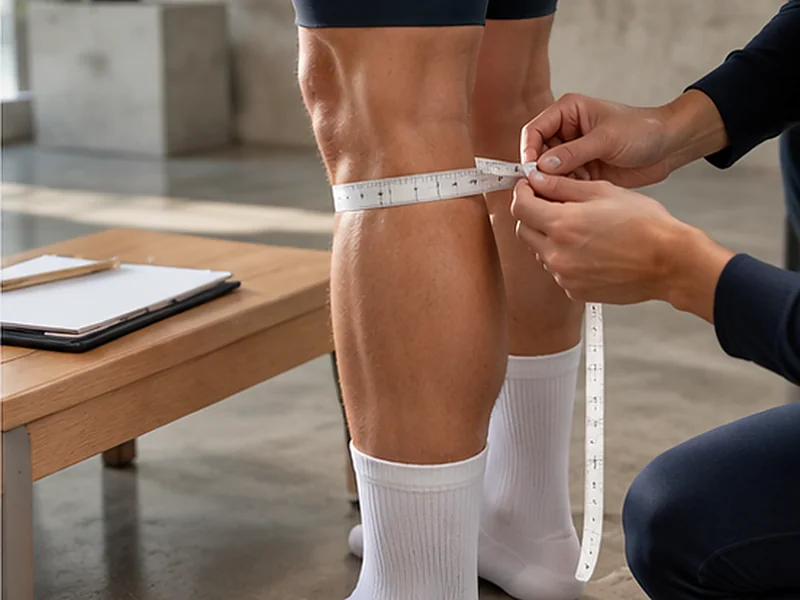
- Calf circumference: at the height where the cuff will sit, and at the widest part of the calf.
- Shoes: note the shoe model and whether it is a wide fit.
- Record anonymously: rider code, measurements and sample feedback. No names are needed.
Compare the measurements with the finished sock measurements of each band. If wide-foot riders cluster at the top of a band's foot-length range, the problem may be length as well as width.
8. Size bands beyond shoe size
Once you know where the fit fails, choose how to handle it:
| Option | When it helps | Trade-off |
|---|---|---|
| Adjust stretch in the existing bands | Most riders fit, and a few find the forefoot or cuff tight. | Check that the sock still holds on narrow feet and slim ankles. |
| Move band boundaries | Wide-foot riders sit at the top of a band's length range. | Changes the size chart and labels for everyone. |
| Add a larger band | A group of riders needs more length and width. | One more line per colour, each quoted separately. |
| Separate wide or tall-calf version | A distinct group needs a different construction. | A new specification, sample and reorder record; developed through custom development. |
Avoid advising riders to "size up" as the only fix. A larger band adds foot length as well as width, which can move the heel pocket and leave extra material at the toe.
9. Our cycling styles and custom fit
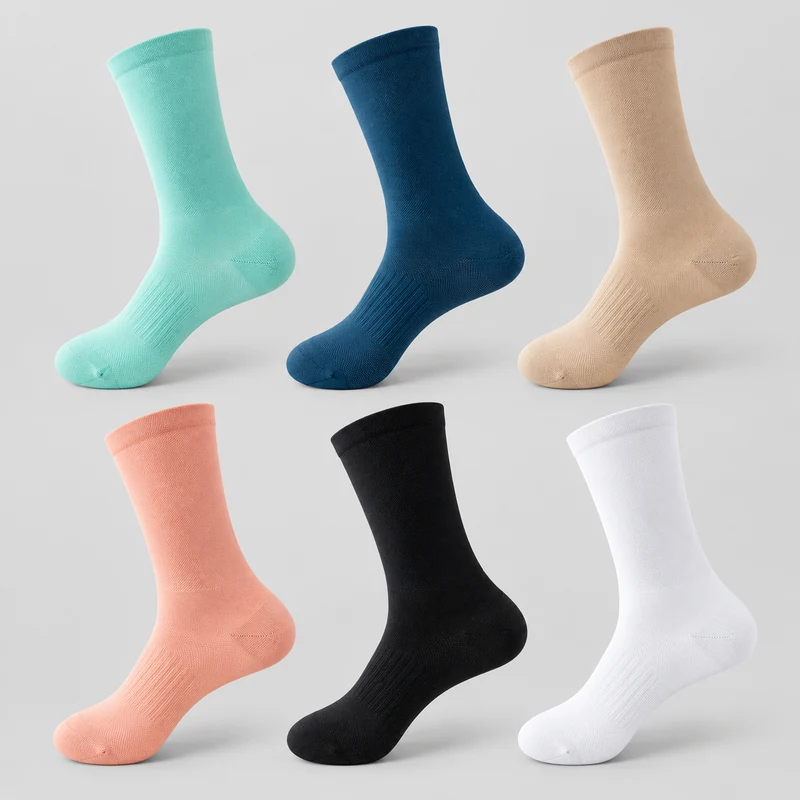
Our three cycling styles are crew references. Their stretch, finished measurements and size chart are confirmed for each order:
Custom Crew Cycling Socks
Solid colours, a smooth cuff and shaped arch knit. Plan rider sizes, club colours and branded packs for your cycling range.
View Product Details →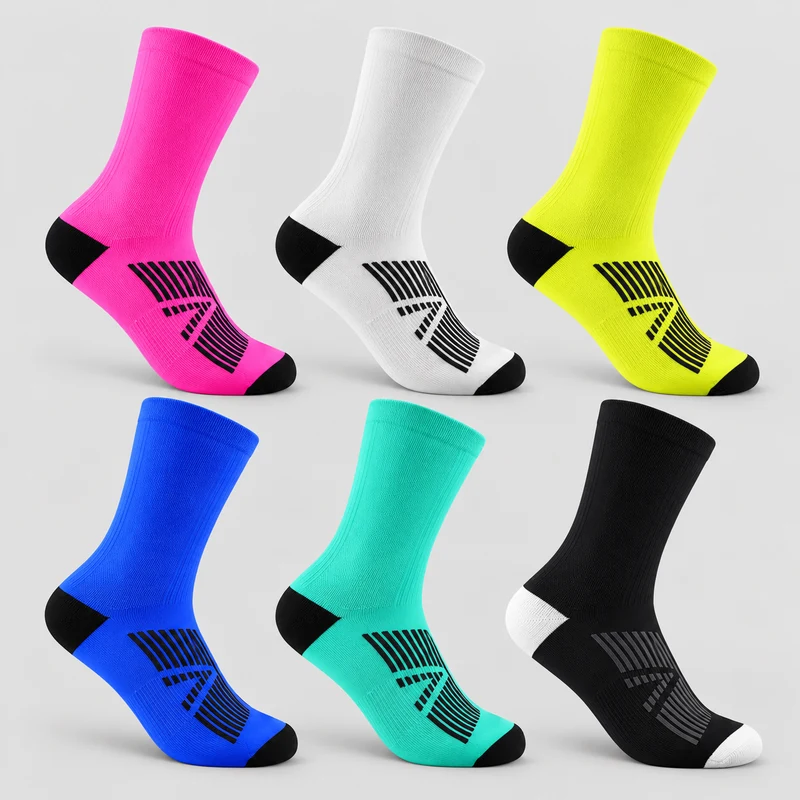
Custom Contrast Cycling Socks
Contrast heels and toes with a geometric arch graphic. Develop rider sizes, club colour combinations and branded packs for your cycling range.
View Product Details →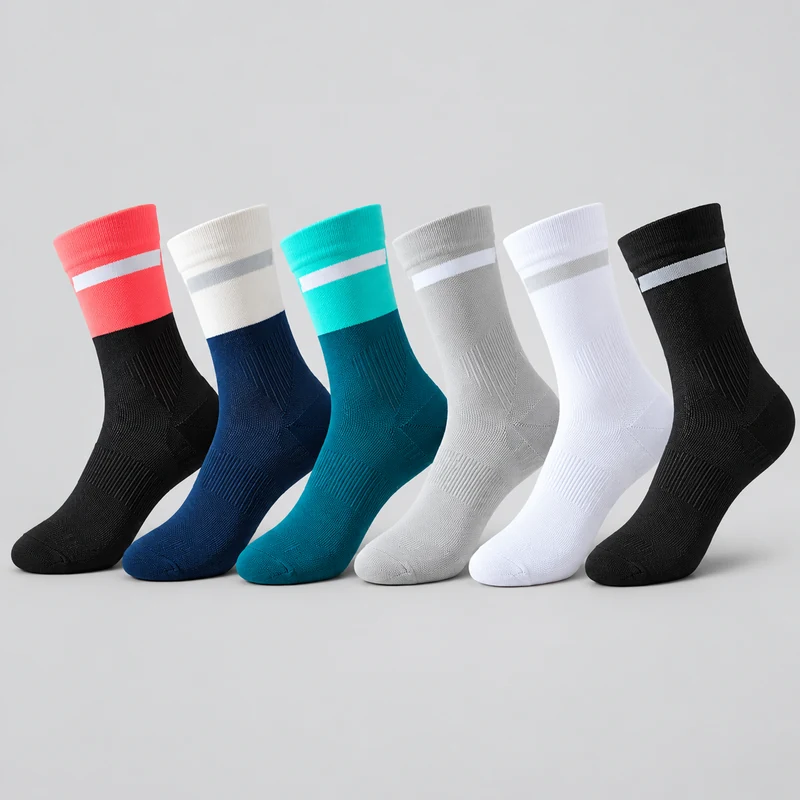
Custom Striped Cycling Socks
A single cuff stripe with colour-block and tonal options. Plan rider sizes, club colours and branded packs for your cycling range.
View Product Details →If your riders need a version with a different fit, such as a different cuff, foot shape or band, it is developed through custom development: reference review, specification, sample approval and a version record for reorders.
10. Sample checklist for wide feet and calves
| Decision | Include in your brief | Approve on the sample |
|---|---|---|
| Riders and shoes | Foot-length ranges, any width or calf measurements, cycling shoes in use. | Fit in the shoes on the widest feet and largest calves in each band. |
| Forefoot and instep | Known fit problems from riders, preferred thickness. | Forefoot, toe seam and instep comfort, start and end of a ride. |
| Cuff | Cuff height and how it is measured; preferred cuff feel. | Ease of entry over the heel, recovery and hold on slim and large calves. |
| Size bands | Bands, markets and pairs per size. | Finished measurements and stretch for each band, recorded in the specification. |
| Wording | How you plan to describe the fit. | Fit and comfort wording only; no compression or medical claim. |
Frequently asked questions
Why do cycling socks feel tight when the size matches my shoe?
Sock sizes are based on foot length. Forefoot width, instep height, heel size and calf circumference also affect fit, and a knitted sock can only stretch so far. Check each one separately on samples.
Should riders with wide feet just size up?
Not as the only fix. A larger band adds length as well as width, which can move the heel and leave extra material at the toe. Consider adjusting stretch, band boundaries or a separate version.
Do you make wide-fit cycling socks?
None of our cycling styles is listed as wide fit. Stretch, finished measurements and size bands are confirmed for each order, and a separate wide or tall-calf version can be developed through custom development.
Are tight cycling socks the same as compression socks?
No. A firm fit is not a compression rating, and we make no compression or circulation claims. Medical compression stockings are specified by pressure and regulated separately.
What measurements should a club collect for sock fitting?
Foot length, forefoot width and calf circumference at cuff height, plus the cycling shoe model. Record them anonymously with each tester's sample feedback.
Next steps
Choose the cuff height with our cuff height guide, compare the styles on custom cycling socks, and send your rider measurements and fit notes through the quote form.